

India Faces Lower Risk of AI Job Disruption Than the West, Says IT Secretary
India may avoid the worst of AI-driven white-collar displacement, but only if it builds skills fast enough, IT secretary S. Krishnan says
News
- Fired OpenAI Researchers Warn Dismissals Could Chill Safety Work
- ARTEX Developer Closes AI Hacking Tool After Bank Attacks
- AI Redraws Global Race for Quant Talent as Coding Tools Lower Entry Barriers
- AI Dispatch | India Draws Billions Into AI
- AI Bots Now Make Up Half of Traffic to US Fed’s FRED Database
- Musk Blames ‘Oligarchs’ For Delay in Starlink’s India launch
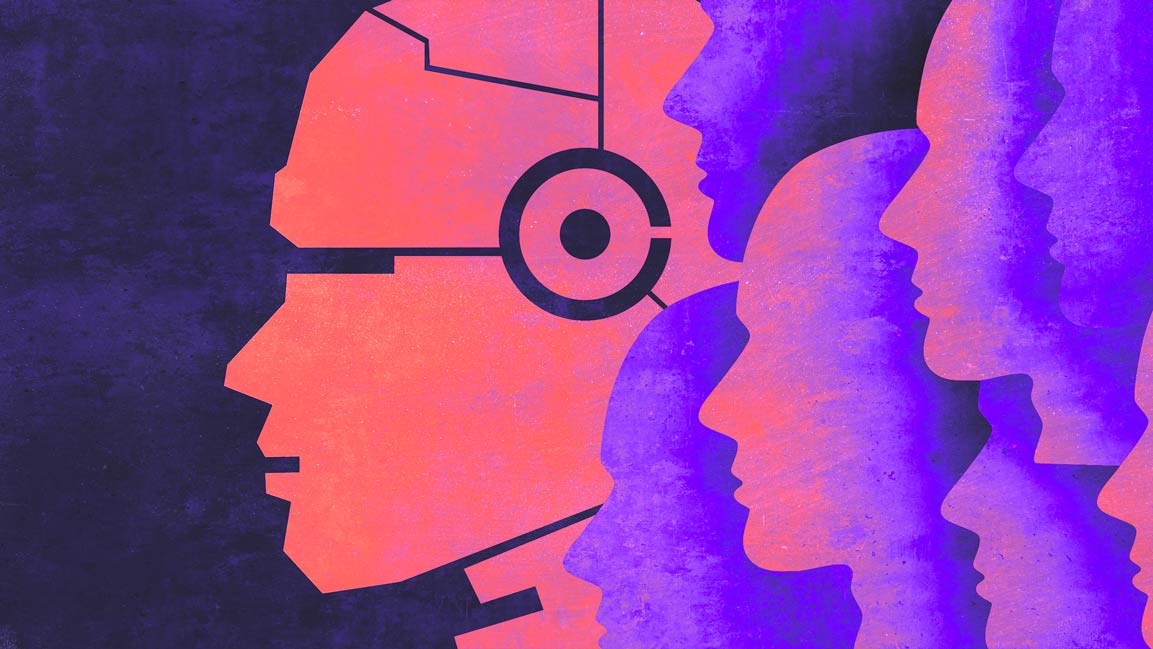
[Image source: Chetan Jha/MITSMR India]
India is likely to face less disruption to white-collar jobs from artificial intelligence (AI) than Western economies, India’s IT secretary S. Krishnan said at a policy event this week, pointing to the country’s unique workforce structure and strength in science and technology fields.
Krishnan said the risk of AI-driven disruption to cognitive jobs in India is lower than in Western countries largely because India has a smaller share of white-collar roles in its total workforce. In contrast, developed economies have a higher proportion of cognitive and office-based jobs that could be affected by automation.
According to Krishnan, the real impact of AI will come not from replacing workers but from building and deploying sector-specific and use-case applications.
That phase of AI adoption, he said, will require large numbers of trained professionals rather than simply cutting existing jobs.
The demand for skilled workers in areas such as software development, model deployment, data science and related fields is where India’s strength in STEM (science, technology, engineering and mathematics) gives it an advantage.
Krishnan also pointed out that AI is the first major technological wave that directly challenges knowledge work and cognitive labor, unlike past industrial revolutions that focused mainly on replacing manual or routine physical tasks. However, he said he does not expect AI to entirely eliminate the need for human workers in the near future.
He noted that productivity tools powered by AI will still require humans to oversee, verify and guide outputs, particularly because AI systems can make mistakes or produce unreliable results without such checks.
While acknowledging concerns about job displacement, Krishnan emphasized that AI technology can enhance human capability and make workers more productive in cognitive tasks, rather than simply taking their jobs away.
He said this dynamic will help India harness AI not just for domestic use but potentially as a global contributor to AI development, boosting jobs and economic growth.
Government officials have also highlighted India’s ongoing efforts to build its own AI applications and models, positioning the country to benefit from the growth of applied artificial intelligence across sectors.
An indigenized AI application model is reportedly in development and expected to be ready ahead of the AI Summit scheduled for February.