AI Guides Surgeons in First Live-Assisted Brain Tumor Operation
The system mapped hidden vessels and nerves during surgery, helping doctors remove a pituitary tumor while keeping control of every decision.
Topics
News
- Fired OpenAI Researchers Warn Dismissals Could Chill Safety Work
- ARTEX Developer Closes AI Hacking Tool After Bank Attacks
- AI Redraws Global Race for Quant Talent as Coding Tools Lower Entry Barriers
- AI Dispatch | India Draws Billions Into AI
- AI Bots Now Make Up Half of Traffic to US Fed’s FRED Database
- Musk Blames ‘Oligarchs’ For Delay in Starlink’s India launch
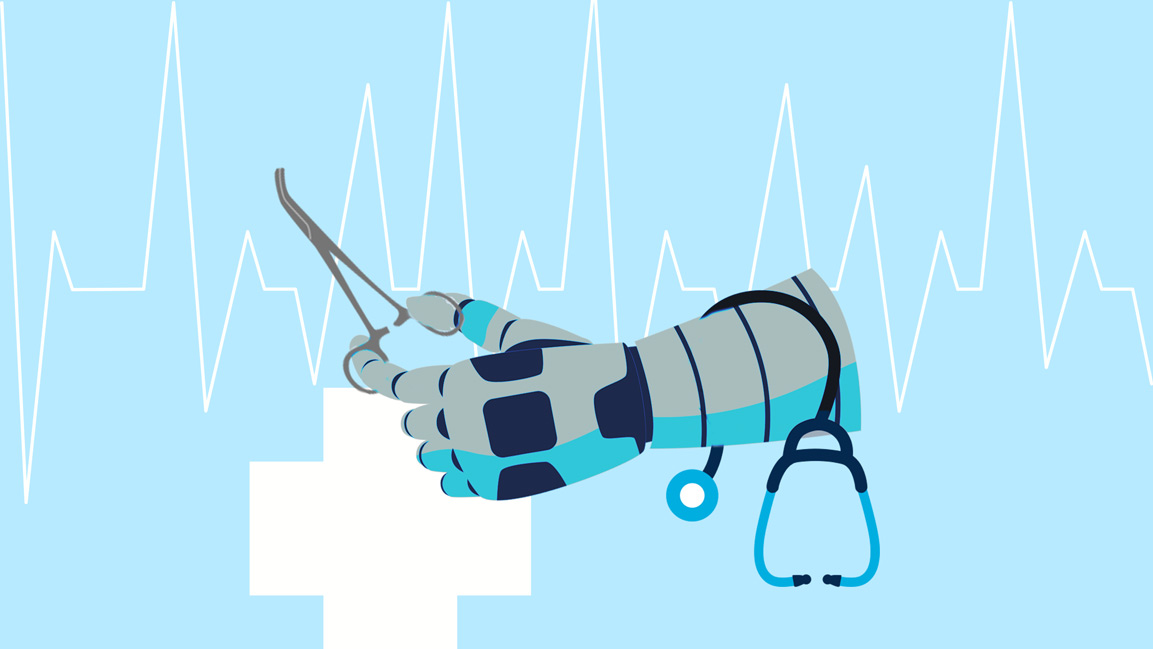
A British patient has undergone what doctors described as the world’s first brain operation using live artificial intelligence assistance, with the technology acting as a second pair of eyes as surgeons removed a tumour close to critical nerves and blood vessels, the BBC reported.
Rhys Hibbert, 48, underwent the procedure at the National Hospital for Neurology and Neurosurgery, part of University College London Hospitals. The father of two had an 11mm non-cancerous tumour on his pituitary gland that had begun pressing on his optic nerves and narrowing his peripheral vision.
During the operation, surgeons inserted an endoscope through Hibbert’s nose to reach the base of his skull. A bespoke AI system analysed the live video feed on a separate screen, tracked surgical instruments and highlighted where important structures, including the carotid arteries and optic nerves, were likely to be hidden.
The aim was not to allow AI to operate independently but to give surgeons additional information while they decided where it was safest to work.
“There are no road signs inside our head,” Hibbert told the BBC, describing the potential value of the technology for patient safety.
The system was trained and evaluated using hundreds of videos of previous pituitary tumor operations, with specialists marking vessels and nerves so that the software could learn to recognise important anatomical structures.
“It is trained on more operations than most surgeons see or do in a lifetime and can act like an expert second pair of eyes,” said Professor Hani Marcus, one of the neurosurgeons who carried out the procedure.
Marcus said the longer-term ambition is to develop something resembling a “ChatGPT for surgeons”, giving doctors another source of expertise during an operation while leaving them free to disregard its advice.
Hibbert said his vision improved immediately after surgery and continued to recover over the following eight weeks. His previous fatigue, dizziness and other symptoms had also subsided.
The technology was developed with funding from the UK’s National Institute for Health and Care Research and Google after years of laboratory testing. Researchers are now preparing a larger trial to determine whether the results can be reproduced across more patients and surgical teams.