

At Fintech Fest, PM Pushes For Global UPI Links to Cut Costs for Indians Abroad
Prime minister says India should connect UPI with payment systems in major diaspora and trade markets, while RBI Governor Sanjay Malhotra backs responsible fintech innovation and wider small business credit.
Topics
News
- Anthropic Discloses Fourth Claude Breach Missed in Earlier Review
- Visa, Mastercard, Ant Push Common Standards for AI Agents Making Payments
- OpenAI Calls for Mandatory US Frontier AI Safety Rules
- NPCI Launches Two Agentic AI Platforms
- SBI Chief Urges ‘Know Your Agent’ Checks as AI Moves From Advice to Execution
- At Fintech Fest, PM Pushes For Global UPI Links to Cut Costs for Indians Abroad
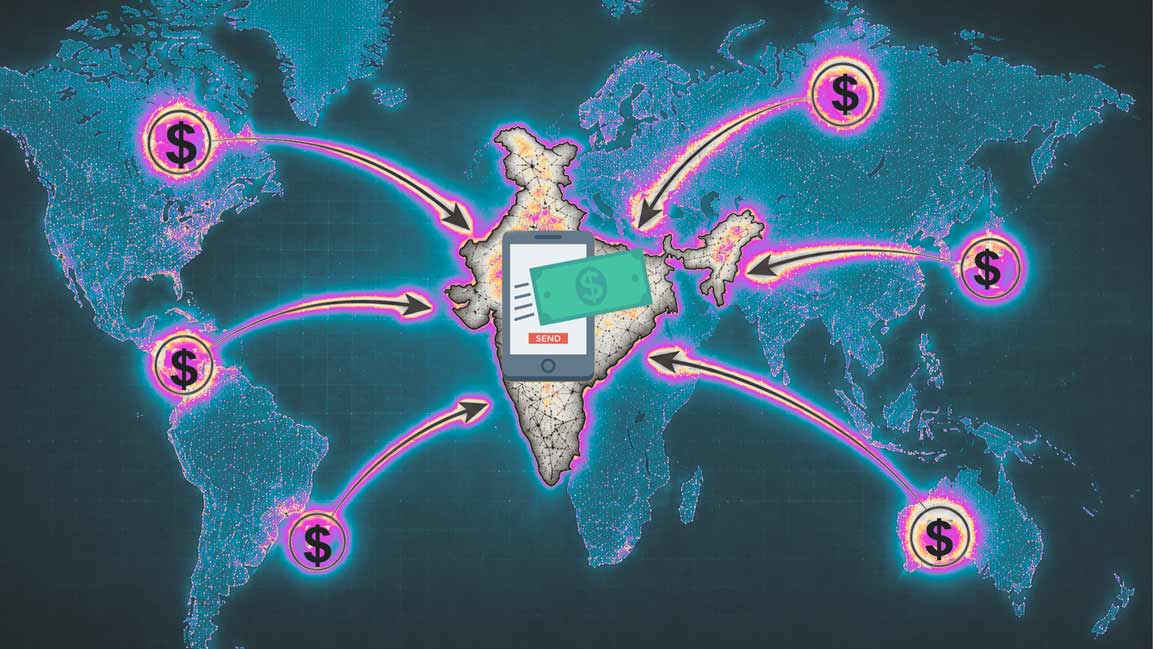
Prime Minister Narendra Modi urged India to connect its Unified Payments Interface (UPI) with payment systems in more countries to cut remittance costs for Indians abroad and move money home faster, putting cross-border payments at the center of his opening address at the Global Fintech Fest 2026 (GFF) in Mumbai.
Modi said Tuesday, 8 September, that India should prioritize countries with large Indian communities, substantial trade links and governments willing to integrate their payment infrastructure. He pointed to the UPI-PayNow linkage with Singapore as a model that could be extended to other markets.
“UPI can save Indians even in this, and money can reach Indian families more quickly,” Modi said, referring to the transaction costs involved in sending money across borders.
The potential impact is substantial. India remained the world’s largest recipient of remittances in FY25, with inflows of $135.4 billion, according to the Economic Survey 2025-26.
Modi said UPI is now live in 11 countries, although those overseas deployments take different forms. Some involve acceptance of UPI payments at merchants, while Singapore has a direct linkage between its PayNow fast-payment system and UPI.
The UPI-PayNow linkage allows customers of participating institutions to make instant cross-border person-to-person remittances between India and Singapore. On the Indian side, UPI IDs can be used to receive funds, while participating Singapore institutions use registered mobile numbers or related payment identifiers.
Modi’s proposal would extend that model by connecting UPI more directly with domestic payment systems elsewhere, rather than merely increasing the number of countries in which Indian travelers can use UPI at merchants.
The push comes as UPI continues to set records at home. The system processed 24.51 billion transactions worth ₹29.82 trillion, or about $314 billion, in August, its highest monthly volume.
Modi said connecting UPI with foreign payment systems should be the next step in its international expansion, with countries that have large Indian populations or substantial trade with India among the priorities.
He also argued that India, after years of adopting card-payment standards designed elsewhere, was now in a position to develop standards of its own and connect them internationally. The remarks point to a broader ambition behind India’s UPI diplomacy, with the government seeking not only wider acceptance of an Indian payment system but a bigger role in shaping cross-border digital-payment infrastructure.
Fintech’s Next Move Beyond Payments
Modi also told the industry that India’s fintech expansion could no longer be measured primarily through payments. He called for fintech companies to increase the role of credit, insurance, savings, investments and pensions, particularly for people and businesses that conventional financial models do not serve efficiently.
His example was a small shop receiving digital payments every day. That activity creates a pattern of income and expenditure that fintech companies could use to understand the business and design credit products for needs that may be too small or unconventional for traditional lending models to serve efficiently.
The same principle, Modi said, could be extended to delivery workers and other small earners who need access to savings, pension, insurance and other financial products. The approach is already visible in PM SVANidhi, the government’s lending program for street vendors. Lending under the restructured scheme has been extended until March 2030, and eligible vendors can receive a UPI-linked RuPay credit card with a limit of up to ₹30,000. As of late August, 27,077 such cards had been approved.
Impact assessments conducted by the Indian School of Business in 2023 and 2025 found that average annualized business income among SVANidhi borrowers grew by around 20% over that period. The 2025 study covered more than 5,000 beneficiaries across 99 urban local bodies, with around 60% of respondents also part of the 2023 sample.
Government disclosures on the studies also show increased adoption of digital payments among street vendors, while around 30% of borrowers across loan cycles reported holding formal loans other than PM SVANidhi loans.
For Modi, the lesson was that digital transactions and the financial infrastructure around them could become the base for a much wider range of financial services.
RBI Backs Innovation But Puts Trust at The Center
Reserve Bank of India (RBI) governor Sanjay Malhotra, in his welcome remarks at the festival’s inaugural session, struck a broadly supportive tone on fintech while emphasizing the regulatory architecture needed to keep innovation safe.
“It has taken banking from the branch to the hand of every citizen,” Malhotra said, describing the effect of fintech on Indian finance over the past decade. He pointed to UPI, Aadhaar-enabled payments and the Jan Dhan banking ecosystem as infrastructure that has allowed people across income groups and geographies to use common digital financial rails.
Malhotra said fintech had also shortened account-opening and payment-settlement times, reduced transaction costs and strengthened fraud detection through artificial intelligence and data analytics.
Credit to micro, small and medium-sized businesses was one area where he said the effect had been particularly significant. Cash-flow-based lending, Account Aggregators and the Unified Lending Interface are helping extend formal and relatively collateral-light credit to small businesses that traditional underwriting models have struggled to assess, Malhotra said.
The RBI, he added, continues to regard fintech companies as partners in building the financial system rather than simply entities to regulate. He cited the central bank’s Regulatory Sandbox, Reserve Bank Innovation Hub and structured engagement with startups and fintech companies.
At the same time, Malhotra stressed self-regulation and responsible innovation, saying the central bank would continue to safeguard trust in the financial system while remaining open to new ideas and participants.
That emphasis overlaps with the four priorities Modi set for the industry at GFF. He called for stronger cybersecurity, industry standards for ethical data protection, closer cooperation between regulators and companies on innovation, and a fintech consumer-protection index that could provide transparent ratings of companies.
The consumer-protection index was presented as a proposal to the industry, not as an announced government or RBI regulation.
Agentic AI Moves Closer to UPI
The festival is also taking place as India considers a potentially significant change in the way some UPI transactions could be authorized. Reuters reported on 1 September, citing people familiar with the plans, that India is preparing a framework called the Unified Agent Protocol that could allow authorized artificial-intelligence agents to make certain small UPI payments without requiring human approval for every transaction.
The proposed system could allow a user to give an AI agent instructions and spending limits in advance, letting the software complete routine low-value purchases within those boundaries.
According to Reuters, the framework could build on mechanisms including UPI Circle, which provides for delegated payments, and Reserve Pay, which allows funds to be blocked for multiple future debits. The reported design could include identity checks, transaction rules, spending limits, audit trails and provisions governing liability.
The details, including the final safeguards, authorization structure and liability framework, have yet to be publicly set out by NPCI.
The work gives practical weight to this year’s GFF focus on agentic AI, tokenization and quantum technology. Modi urged fintech companies to turn such technologies into products with measurable impact while addressing the security, data-protection and consumer risks that come with them.
Modi Pitches India’s Resilience to Global Fintech Investors
Modi also used the event to make a broader economic case for India at a time of geopolitical conflict, pressure on energy and commodity supply chains and trade tensions.
India’s economy expanded 7.8% from a year earlier in the April-June quarter, above the 7.1% median forecast in a Reuters poll and the RBI’s 7% projection.
He also highlighted Japan Credit Rating (JCR) Agency’s 2 September decision to upgrade India’s long-term foreign- and local-currency issuer ratings to A- from BBB+, with a stable outlook.
The move returned India to the A sovereign-rating category for the first time in more than 35 years. India was last rated in the A category by Moody’s in 1988. JCR’s upgrade came while the three largest global rating agencies, S&P Global Ratings, Moody’s and Fitch, continue to rate India below the A category.
JCR cited India’s economic growth, the effectiveness of policies supporting growth and improvements in the soundness of its financial system. The government’s account of the upgrade also highlighted improving fiscal quality and a robust external position.
Modi said the rating action reflected greater confidence in India’s growth momentum, macroeconomic stability and structural reforms, and pledged that the government’s reform program would continue.
The seventh Global Fintech Fest runs from 8 September through 11 September at Mumbai’s Jio World Centre and Trident BKC. The inaugural session was held 8 September, while the other sessions and expo run from 9 September through 11 September . The Payments Council of India, National Payments Corporation of India and Fintech Convergence Council are the organizers.
Its 2026 theme is “Potential to Impact,” with agentic AI, tokenization and quantum technology framed around trusted, connected and global systems for inclusive finance.