


AI Debt Collectors Will Chase Whatever Lenders Reward
New RBI rules will make recovery calls easier to monitor. But automation can scale bad collection practices as easily as good ones.
News
- Fired OpenAI Researchers Warn Dismissals Could Chill Safety Work
- ARTEX Developer Closes AI Hacking Tool After Bank Attacks
- AI Redraws Global Race for Quant Talent as Coding Tools Lower Entry Barriers
- AI Dispatch | India Draws Billions Into AI
- AI Bots Now Make Up Half of Traffic to US Fed’s FRED Database
- Musk Blames ‘Oligarchs’ For Delay in Starlink’s India launch
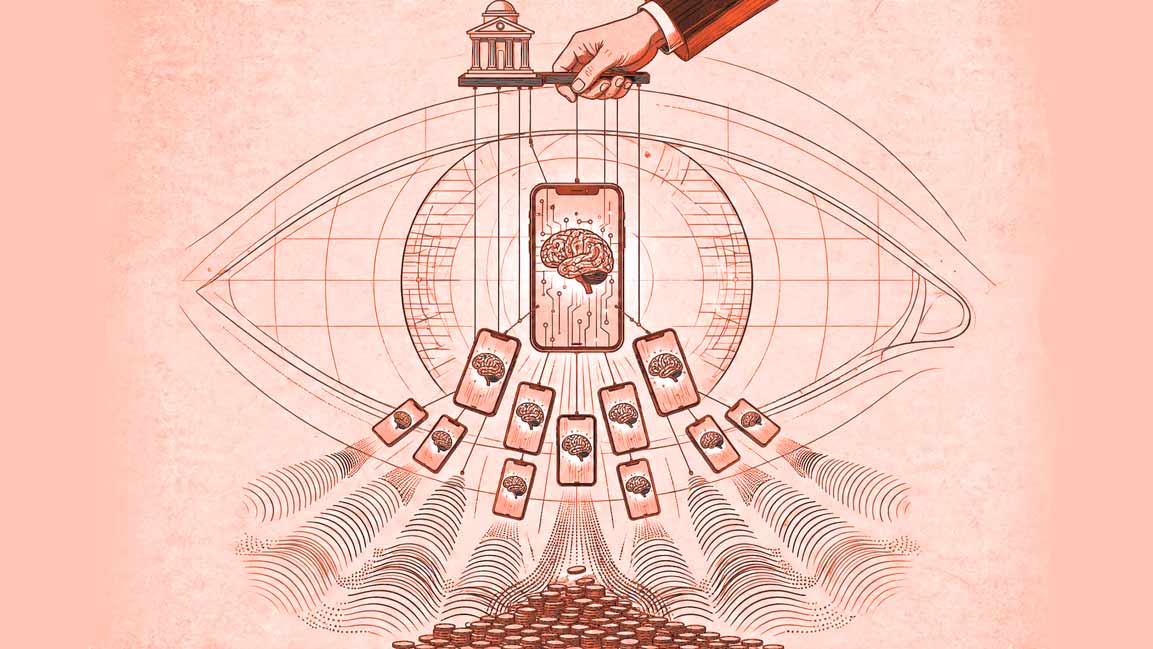
Key Takeaways
01
Indian lenders have long outsourced collections to agencies paid on what they recover, an arrangement that can reward pressure on borrowers.
02
From January 2027, recovery calls must be recorded, and automated systems make that record easier to keep, search, and audit.
03
Software carries out whatever incentives lenders set, so contact limits, human handover, and vendor reviews that count complaints matter as much as the technology.
From January 1, 2027, Indian lenders must record the calls their staff and recovery agents make to borrowers who fall behind. The Reserve Bank of India (RBI) set that rule on August 6, in directions covering banks and nearly every other kind of lender it regulates. The rules also require certified agents, a public list of each lender’s collection agencies, and a separate channel for recovery complaints.
Much of India’s collection work has long gone to outside agencies, many of them small firms paid according to what they recover. In 2025, Karnataka made coercive recovery of micro and small loans a crime punishable by up to 10 years in prison. The state acted after reports of harassment by agents collecting for microfinance institutions and moneylenders. Its law exempts lenders regulated by the RBI, but it shows how little patience lawmakers have left for strong-arm collection.
Software companies such as DPDzero now sell lenders AI agents that call borrowers in their own language and log every word. The RBI has made a record of each conversation compulsory, and automation makes that record easy to keep and search. The same systems can make far more calls than any human team could. They carry out whatever targets a lender sets, and the lender answers for every call.
Outsourcing Gave Collectors a Reason to Push Hard
Ananth Shroff co-founded DPDzero in Bengaluru in 2022 and runs it as chief executive. The company sells AI collection services to banks and non-banking financial companies, or NBFCs, so his view comes with a commercial interest.
“Collections is the least innovated pillar of credit,” Shroff says. “Capital, acquisition, and underwriting have seen massive investment. Collections haven’t.”
Debt recovery tribunals, created under a 1993 law, hear only claims of ₹20 lakh (about $20,800) or more. The 2002 SARFAESI Act lets lenders seize secured assets without going to court, but most personal loans and credit-card debt are unsecured. For smaller debt, arbitration and civil courts are still available, but formal proceedings often cost more than they recover. That leaves calls, messages and field visits as the main tools for early recovery, much of it handled by outside agencies.
Borrowers are often treated like criminals. There’s almost no focus on experience or empathy.
– Ananth Shroff, co-founder and CEO, DPDzero
Banks pass overdue accounts to agencies in batches sorted by how long they have gone unpaid. A loan turns bad once it is more than 90 days past due, and firms handling the early stages try to prevent that.
A 2023 Business Today investigation found thousands of small recovery offices doing this work, most of them sole proprietorships. Their pay rises with the share of dues they bring in, putting pressure on agents to maximize recovery.
“Borrowers are often treated like criminals,” Shroff says. “There’s almost no focus on experience or empathy.”
The RBI’s August rules list the conduct it wants gone, including abusive language, threats, excessive calls, and shaming borrowers on social media.
Earlier RBI circulars banned much of this too. Proving a breach has always been harder than banning it, and recordings change that.
Household debt reached 45.5% of GDP at the end of September 2025, according to the RBI’s June Financial Stability Report. That was below Thailand’s 87.3%, Malaysia’s 69.9% and China’s 59% in the RBI’s emerging-market comparison. The more striking change is in what Indians are borrowing for. By March 2026, non-housing retail loans accounted for 58.4% of household borrowing, while loans for consumption made up nearly half of the total.
Fintech lenders now hold more than half of the market for personal loans under ₹50,000 after a rapid expansion. The RBI also flagged rising delinquencies of 6.4%, saying they signaled potential risks to asset quality. Bad loans across banks, by contrast, sat at a multi-decade low. This kind of lending can leave lenders managing large numbers of small overdue accounts. Each is worth too little to justify a home visit.
The RBI’s Rules Make Recovery Calls Auditable
The RBI first proposed the recovery rules in February 2026 and revised them in May after public comment. It issued them in final form on August 6.
Agents may contact borrowers only between 8 am and 7 pm unless asked otherwise, a limit in place since 2022. Each call must be recorded, the borrower told, and the recording kept for six months. Lenders may lock a phone only if the loan paid for that phone.
Recovery agents will need a certificate from the Indian Institute of Banking and Finance or one of its partners. Those already working have until January 1, 2028, to qualify.
Lenders must also publish the recovery agencies they use and update the list within seven days of any change. Borrowers can then check whether the agency contacting them is authorized.
An automated calling system can refuse to dial after 7 pm, record every call, and store the transcript where an auditor can search it. A supervisor checking a dozen agencies by hand cannot match that. Software can also cap how often any borrower is contacted across every channel and vendor. Such limits are hard to enforce when calls come from agents’ personal phones.
The recordings can protect agents from false complaints and show when abuse has occurred. They also give lenders a clearer view of what their collection agencies are actually doing.
That may expose scripts or tactics lenders would not want associated with their name. The transcripts can also show which approaches recover money and which generate complaints.
The Telecom Regulatory Authority of India (Trai) ordered banks and NBFCs to move service and transaction calls to a dedicated 1600 number series. The deadlines fell between January and March 2026. The aim is to help customers tell a real lender from a fraudster.
From May 13, 2027, India’s data protection rules require security safeguards for personal data, and call recordings hold a great deal of it. The lender stays responsible for that information even when a vendor’s system records and stores it.
A single call about an overdue loan now answers to a central bank, a telecom regulator, and a privacy law.
DPDzero’s voice agents speak 10 Indian languages and can switch between them mid-call, according to the company. Low-risk borrowers get digital reminders, and the riskiest cases go to human callers. During a conversation, the AI agent can send a payment link so the borrower can pay through UPI before hanging up. Cashfree Payments and other fintech firms offer links of this kind for loan repayments.
DPDzero also sorts borrowers into types it calls “supportive,” “bargaining,” “intentional,” and “escapist,” and plans its approach to each.
“If the system detects a borrower is going through a crisis, it can automatically pause outreach,” Shroff says. “That kind of discipline is hard to maintain manually.”
FICCI and the Indian Banks’ Association surveyed 24 banks early in 2026. The bankers ranked AI as the development most likely to change how they operate, with underwriting, risk assessment, and collections among the areas expected to be affected.
Software Inherits the Incentives Lenders Set
Rishabh Goel runs Credgenics, a collections software company that raised $50 million from Accel and WestBridge Capital in 2023.
In September 2025, he told Business Standard that its bots were being used by ICICI Bank, HDFC Bank, Yes Bank and L&T Finance to remind borrowers about payments. The same report described a harsher use of the technology. Some borrowers who had missed payments were getting video calls from an AI avatar dressed as a lawyer. The avatar used legal language and a firm tone to ask for payment.
An unnamed bank executive quoted in the report said an AI agent cost about half as much as a human caller.
DPDzero says its clients have fewer overdue loans getting worse. In some cases, it puts the improvement at as much as 25%.
The economics are easy to see. Bots are cheaper and can make far more calls than people can. That also creates a risk. A bad setting can mean the same borrower is contacted again and again, or thousands of borrowers are called too often. RBI rules already prohibit excessive calling.
Performance-linked pay helped create the pressure problem in agency collections. A lender that judges vendors only on what they collect rebuilds the old incentive in software. Complaints, repeated calls and cases passed to human staff can show what happened before the money was recovered.
The August recovery directions do not mention AI. They require lenders to monitor and control the agencies that collect on their behalf.
A separate RBI draft on model risk, issued on June 24, 2026, sets rules for AI systems that deal with customers. If adopted, lenders would have to tell people when they are dealing with AI and warn them about its limits. Customers could also ask to switch to a human.
The draft holds lenders accountable for models bought from vendors and calls for ways to override, suspend, or switch off any model. It also asks for stricter explainability where a system drives material decisions or has a significant impact on customers.
Collections are not mentioned, but a model that decides whom to call, how often and in what tone still has a direct effect on borrowers. Comments closed on July 24, and the RBI has yet to issue final guidance.
DPDzero sends difficult cases to human callers, and its field teams still visit borrowers. Bots handle routine reminders. People deal with disputes, hardship and borrowers who do not respond. Those workers will need the new certificate, and their calls will also have to be recorded.
What Leaders Need to Decide
Senior Executives | Before the rules take effect on January 1, 2027, decide which collection work moves to software and what rules it must follow. Set one limit on how often a borrower can be contacted, counting people, bots, and messages together. Define the points at which a bot must hand the conversation to a person, including disputes and signs of hardship. Judge every vendor on complaints and repeat contacts as well as on recoveries. |
Functional Leaders | Before January 1, check that every agency, telecaller, and bot feeds the same contact count and keeps the recordings the RBI requires. Remove scripts that misrepresent legal authority or use misleading legal language. Make sure agents working your accounts hold the IIBF certificate before the one-year window for existing agents closes in January 2028. |
Boards and Governance | Before India’s data protection safeguards take effect on May 13, 2027, ask management for a register of every model used in collections. It should show who supplied each one, what it decides, and who can switch it off. At each risk review, ask for complaints broken down by channel, so directors can see whether bots or people draw more of them. |
The RBI’s draft guidance would also leave lenders responsible for models supplied by vendors.
Lenders have often blamed threatening calls on rogue agents working for outside agencies. From January, those conversations will be on record, and more of them will come from software the lender chose and set up.
AI will make collection easier to monitor. It will also pursue a bad target as faithfully as a good one, and the lender sets the target.
RESEARCH CONTEXT
This article draws on insights from Ananth Shroff of DPDzero and reporting on Rishabh Goel of Credgenics, alongside the RBI’s 2026 recovery directions, draft model-risk guidance and Financial Stability Report, the telecom regulator’s 1600-series order, India’s data protection rules, Karnataka’s 2025 lending law, the FICCI-IBA Bankers’ Survey, and reporting by Business Standard and Business Today. DPDzero’s performance figures are its own.
About the Author
Vidyashree has the curiosity of an investigative journalist and the thrill of tech. Her reporting largely centers on how AI is reshaping India, one story at a time.
View More