


Skyroot Targets Monthly Rocket Launches From 2027: Report
The company is studying data from Vikram-1’s successful orbital debut before moving towards regular commercial missions.
Topics
News
- Fired OpenAI Researchers Warn Dismissals Could Chill Safety Work
- ARTEX Developer Closes AI Hacking Tool After Bank Attacks
- AI Redraws Global Race for Quant Talent as Coding Tools Lower Entry Barriers
- AI Dispatch | India Draws Billions Into AI
- AI Bots Now Make Up Half of Traffic to US Fed’s FRED Database
- Musk Blames ‘Oligarchs’ For Delay in Starlink’s India launch
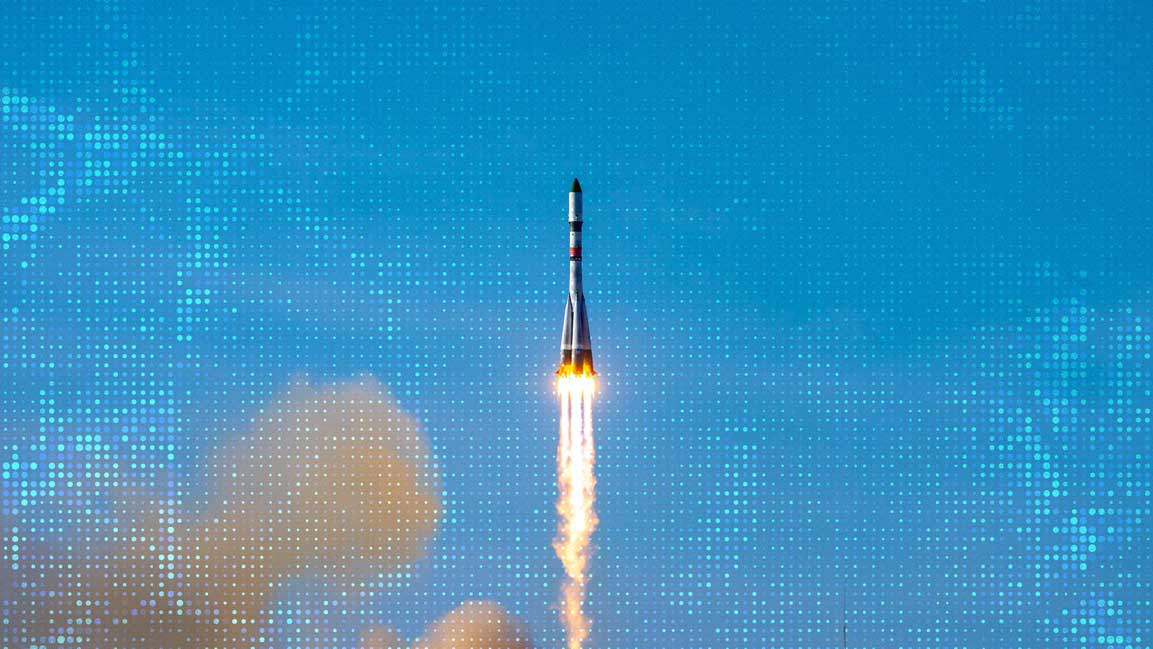
Skyroot Aerospace aims to develop the capacity to launch one Vikram rocket a month from 2027, Chief Executive Officer and co-founder Pawan Kumar Chandana told The Economic Times after the successful orbital debut of Vikram-1.
The July 18 mission made Vikram-1 India’s first privately developed rocket to complete an orbital flight. The rocket deployed six payloads, including two satellites, into low Earth orbit.
Chandana said Skyroot would first study data from the mission, make improvements and conduct further flights before increasing launch frequency.
“We first have to learn from data, make improvements based on that, and conduct more missions. Getting to one launch a month is the sequence of activities that follows,” he told The Economic Times.
Skyroot is planning another Vikram-1 test flight this year and is also developing Vikram-2, a larger launch vehicle. Chandana said demand for launches already exceeds supply.
Vikram-1 is a 22-metre rocket designed to carry payloads of up to 350 kg to low Earth orbit. It uses three solid-fuel stages and a restartable liquid-propellant upper stage, allowing multiple payloads to be deployed into their intended orbits.
The maiden mission, named Aagaman, was intended to validate the rocket and its onboard systems under actual flight conditions. Its successful completion demonstrated that Skyroot could design, manufacture and fly an orbital-class launch vehicle.
The company’s next challenge is to turn that achievement into a regular commercial service.
Reaching a monthly launch rate would require Skyroot to manufacture rockets on a predictable schedule, shorten testing cycles and secure consistent access to launch infrastructure. It would also need a steady pipeline of customers and repeated successful missions to establish reliability.
Satellite operators typically consider price, launch schedules, orbital requirements and a rocket’s flight record before choosing a launch provider. One successful flight establishes technical credibility, but a sustainable business depends on being able to repeat it.
Skyroot is also developing Vikram-2, which is expected to carry about three times as much payload as Vikram-1. The larger rocket is part of the company’s effort to serve a broader range of satellite missions as it moves towards commercial operations.
The company has longer-term plans to develop reusable launch systems, including the recovery of rocket stages. Reusability could reduce the cost of individual launches, although such systems require additional testing, infrastructure and capital.
India’s private launch sector has expanded since the government opened more space activities to non-government companies and established IN-SPACe as the regulator and promoter of private participation.
The Indian Space Policy 2023 permits private entities to develop, own and operate launch vehicles, including reusable and recoverable transportation systems.
The policy is intended to allow private companies to take on a larger share of commercial activity while the Indian Space Research Organisation focuses more heavily on scientific, strategic and deep-space missions.
Somak Raychaudhury, vice-chancellor of Ashoka University and a former director of the Inter-University Centre for Astronomy and Astrophysics, wrote in The Economic Times that Vikram-1’s longer-term significance would depend on Skyroot’s ability to make launches routine.
“Skyroot’s perfect debut validates India Inc’s space push, repeat launches will prove the model,” he wrote.