

Zoho’s Arattai is Aiming to Be More Than India’s Next WhatsApp
Jeri John, Global Product Head, Arattai, discusses how Zoho views the dominance of WhatsApp, and why Arattai is worth building.
News
- Sovereign Wealth Funds Chase AI Infrastructure Boom
- Indian IT Firms See Agentic AI Opening $400 Billion Opportunity
- OpenAI Hires Uber Veteran Prabhjeet Singh for India Push
- India-US Talks Put AI Stack In Focus
- OpenAI Plans Limited GPT-5.6 Rollout After White House Request
- Employers Still Want MBAs Even as One in Three Hands Entry-Level Work to AI
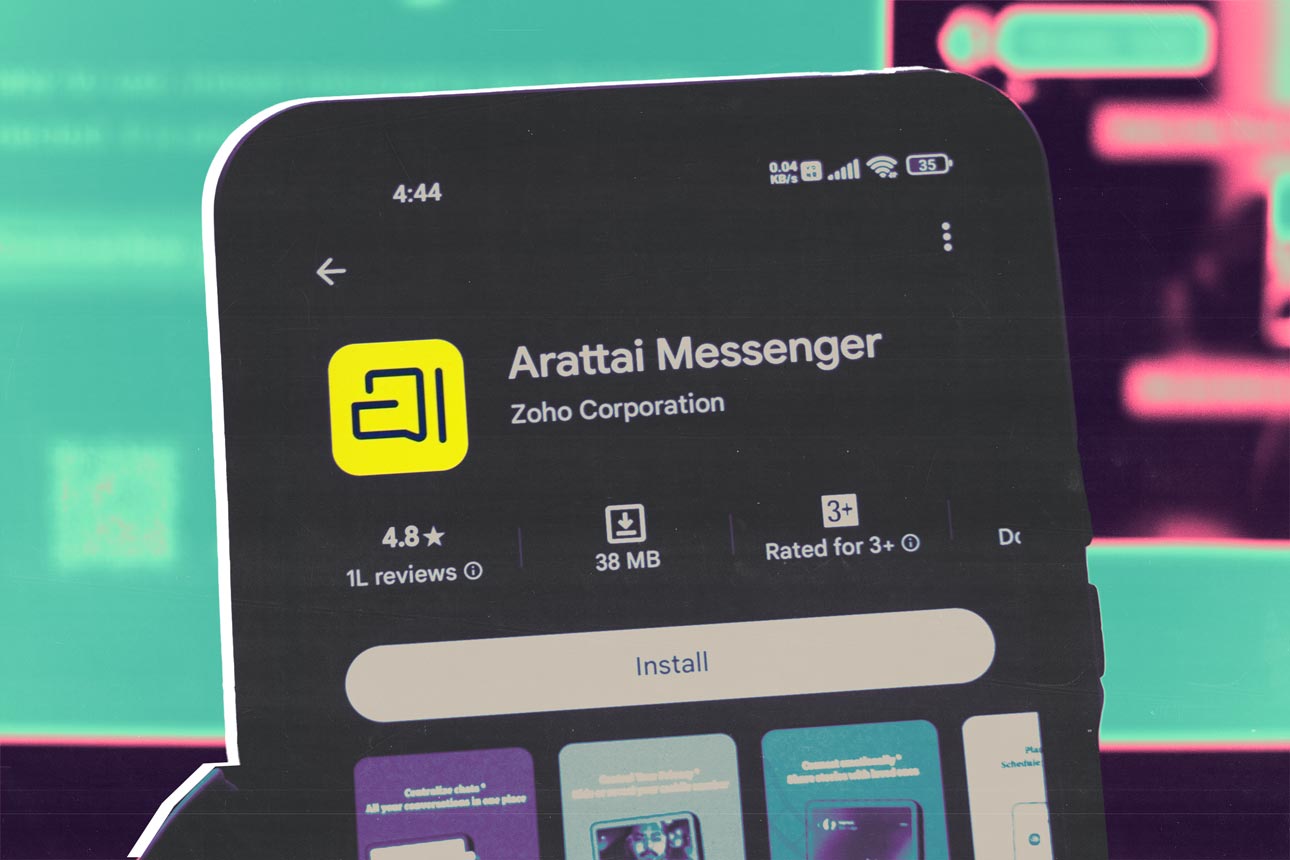
Zoho’s made-in-India messaging app, Arattai, quietly launched in January 2021 but gained nationwide popularity in September 2025 following government endorsement and increasing demand for a local WhatsApp alternative. By early October, the platform had surpassed 7.5 million downloads across Android and iOS.
However, the decline occurred within a matter of weeks.
A LinkedIn post captured the collapse aptly: “Arattai lost 98.6% of its downloads in just weeks. Can a ‘better’ product ever beat WhatsApp?” The post continued: “Arattai crashed from 13.8M downloads to 195K in weeks!
It isn’t a bad product… But none of it mattered.”
The writer listed Arattai’s strengths, multi-device support, slow-internet performance, and end-to-end encryption before landing on the central argument: India’s messaging habits are cemented by unbreakable network effects.
“Your phone number is your digital identity now. Switching messaging apps isn’t like switching Netflix to JioHotstar. You’re asking everyone you know to move with you. And they won’t.”
Others echoed this sentiment. A UK-based observer wrote that in India, WhatsApp has become “the digital backbone for daily life and commerce,” powering everything from family businesses to neighborhood stores.
Citing Dharmesh BA’s essay “WhatsApp Owns India!”, the post warned of the risks of relying on a foreign-owned platform whose priorities do not always align with those of India’s SMEs.
Inside Arattai’s Strategy
Zoho maintains a long view.
In an exclusive conversation with MIT SMR India, Jeri John, Global Product Head at Arattai, explains how Zoho views WhatsApp’s dominance and why Arattai is still worth building.
“We are developing Arattai to be a mature, feature-rich platform. In the long term, we would like to be recognised as a trusted, privacy-first alternative in the global messaging space.”
John emphasized Arattai’s core differentiator: a philosophy built on enterprise-grade security inherited from Zoho Cliq.
“What sets us apart from our competitors is our commitment to privacy. That means no ads and no data selling. Arattai is also a result of all our learnings that happened over decades through our business communication tool, Cliq.”
The backend is enterprise-grade, which means stronger privacy, more robust security models, and a more stable foundation.
Arattai also offers user-focused privacy features, including protection from phone number exposure in groups, controls that let users decide who can initiate chats, and the option to share only a username instead of a phone number.
The app extends its utility with a dedicated Android TV app designed for family video calls, along with a built-in “pocket” for secure personal media storage. Zoho is additionally working on “privacy-first AI features” that keep user control at the center of the experience.
Where WhatsApp Falls Short
While WhatsApp has over 500 million users in India, John believes there are cracks in the experience that Arattai is specifically designed to address.
“Arattai was built keeping Indian users in mind—diverse languages, varying connectivity conditions, etc. We also listen closely to user feedback and implement necessary improvements as we would like to gain our users’ trust through reliability, security, and by providing features that actually matter to them.”
One central focus area is spam. “We are actively working on minimizing unwanted connections and spam. We would like to take calculated action against spam.”
John hinted at a more curated, safer messaging environment where users can choose to communicate only with verified users or restrict chats exclusively to family members. Zoho is also exploring the addition of direct feeds from trusted government sources. Another gap he highlighted is in business communication.
“We do not have many communication applications with powerful business API integrations. With Arattai, we are working on seamlessly integrating business operations with the application without compromising on the privacy and convenience of the user.”
If executed well, this is the one domain where WhatsApp’s complexity and pricing have created frustration, and where Arattai may find its earliest loyal user base.
Going Beyond India
Zoho’s global footprint gives Arattai an unusual advantage. Zoho has customers in over 150 countries and offices in over 80 countries. “Our solutions are built in India,” he says.
Compliance is also a strength. “We ensure trust and respect for regional standards. We are fully GDPR compliant in Europe.” John describes Zoho’s philosophy as “transnational localism”, focusing on building globally connected products while remaining embedded in local culture and community.
Responding to the Department of Telecommunications’ new directive on SIM-binding and security enforcement, Zoho expressed measured support.
“The Department of Telecommunications’ directive arrives amid a rising surge of digital scams. While we recognize the need to implement this, we are actively working on the necessary backend adjustments to ensure it functions effectively.”
Some use-cases, John noted, still require clarification. Still, the direction is clear: “Our goal is to comply with the 90-day deadline, striving to balance adherence to the directive while preserving a seamless user experience.”
Can Arattai Compete with WhatsApp?
The short-term numbers are tough, and the network effects are brutal. WhatsApp isn’t just dominant, it’s woven into the fabric of India’s daily life, business workflows, and even government communication.
The app’s rise has been nothing short of historic. What began as an iOS-only app hit its inflection point in 2010 with the Android launch, surged to 250,000 users, and exploded to 200 million by 2013. Facebook’s $19 billion acquisition a year later only cemented its global ambitions.
Today, WhatsApp is a dominant force.
India alone has 853.8 million users, the largest user base in the world.
It’s the second most downloaded app on Google Play. And globally, 38% of the entire population and 69% of all internet users outside China are on it.
Against that scale, Arattai is the classic underdog—small, scrappy, and swimming against a tidal wave of entrenched behavior. But it’s also doing something WhatsApp no longer can: reinventing messaging from first principles, with privacy, local relevance, and user control as non-negotiables.
Arattai isn’t trying to win the war today. It’s laying the foundation for a future where India may demand more than convenience, where digital sovereignty, transparent systems, and privacy-first design might finally matter as much as network size.