


India’s Data Center Boom Shifts Into a Capital-Intensive Phase
Capacity is poised to cross 2GW in 2026 as hyperscalers, AI workloads, and data rules push the industry from incremental buildout to core infrastructure.
Topics
News
- Fired OpenAI Researchers Warn Dismissals Could Chill Safety Work
- ARTEX Developer Closes AI Hacking Tool After Bank Attacks
- AI Redraws Global Race for Quant Talent as Coding Tools Lower Entry Barriers
- AI Dispatch | India Draws Billions Into AI
- AI Bots Now Make Up Half of Traffic to US Fed’s FRED Database
- Musk Blames ‘Oligarchs’ For Delay in Starlink’s India launch
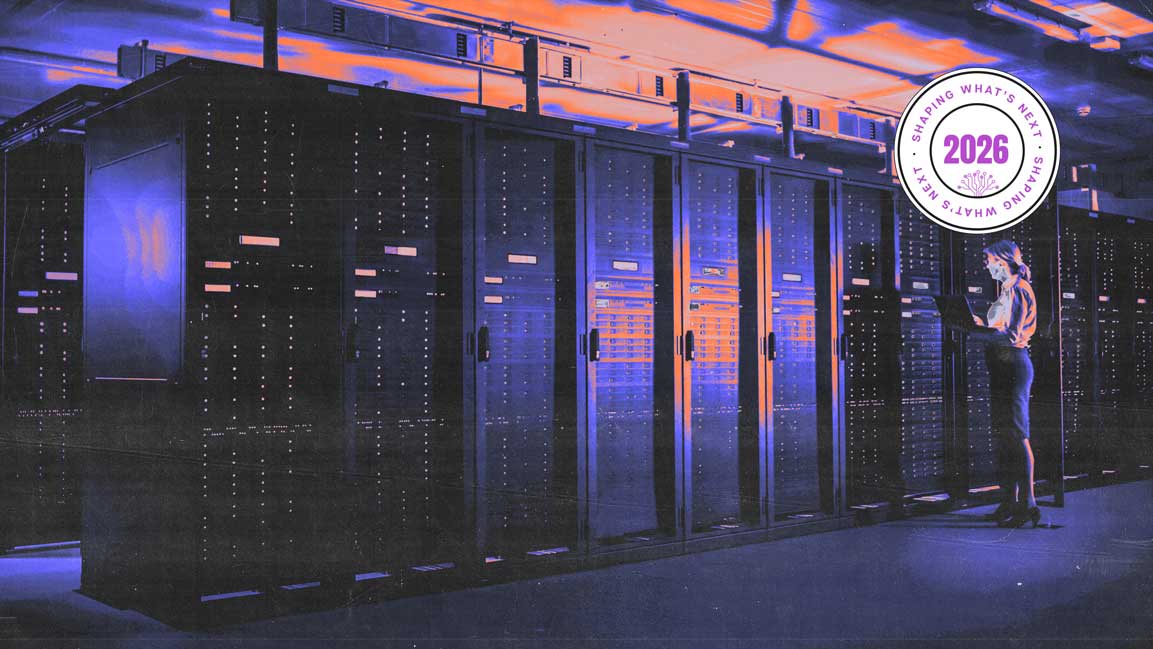
India’s data center industry is entering a more capital-intensive phase in 2026, as capacity additions move beyond incremental expansion toward what investors and operators increasingly describe as core infrastructure.
Capacity is projected to move past 2 gigawatts (GW) in 2026, up from about 1.5GW of operational data center stock as of the first nine months of 2025, according to CBRE. Other industry estimates, which include capacity under construction and near-term supply additions, place total capacity closer to 2GW by the end of 2025.
The step-up reflects rising demand from cloud computing, artificial intelligence workloads, and regulatory requirements that are reshaping where data is processed and stored within India.
Industry forecasts suggest capacity could exceed 8GW by the end of the decade, implying cumulative investment of more than $30 billion. Unlike earlier waves of construction, the current cycle is being driven less by enterprise outsourcing and more by hyperscalers, AI-heavy applications, and policy constraints around data localization.
Companies such as Adani Group, CtrlS, Nxtra, Sify and Web Werks, alongside international operators including Equinix, NTT and Sterling and Wilson, are competing to secure land, power connections and long-term anchor tenants. The race has intensified as cloud providers lock in capacity years in advance to hedge against power and permitting bottlenecks.
Operations become more automated
Data center operations are also changing. Facilities that were once run with fixed configurations and manual oversight are increasingly adopting automation across networking, maintenance and workload management.
“What used to be backend infrastructure is becoming a dynamic layer at the center of enterprise strategy,” said Ranganath Sadasiva, chief technology officer at Hewlett Packard Enterprise (HPE) India.
Network configurations are being adjusted in real time, maintenance is shifting toward predictive models, and security controls are being embedded directly into infrastructure.
The shift is especially visible outside the largest metros. Smaller regional facilities are taking on workloads that were previously centralized, including AI inference and regulated data processing, as companies seek lower latency and tighter control over data residency.
Policy and demand converge
Several forces are converging behind the buildout. India has one of the world’s largest mobile data markets, a rapid 5G rollout, and growing adoption of AI across sectors such as banking, retail and manufacturing. At the same time, government policy has made data sovereignty a binding constraint rather than a compliance option.
The policy shift has been sharpened by India’s Digital Personal Data Protection Act, which allows cross-border data transfers but leaves room for the government to restrict transfers to notified jurisdictions, while sector-specific regulations and enterprise compliance requirements continue to pull more workloads onshore.
For enterprises and hyperscalers, data localization is increasingly a compliance-driven constraint rather than a pure design choice, shaped by a combination of regulatory discretion, sector-specific rules, and contractual requirements from large customers.
“Data infrastructure has moved into the boardroom,” said Unaise Urfi, a partner at KPMG India, adding that capacity decisions are now tied to growth strategy, compliance risk and operational resilience.
Global technology companies are expanding their footprint accordingly.
Google is developing an AI-focused campus in Visakhapatnam as part of a broader investment program that runs through 2030, including a roughly $15 billion commitment over 2026-30, combining compute infrastructure with renewable energy and fiber connectivity through partnerships with Indian operators.
Microsoft Corp. has announced plans to invest $17.5 billion in India over a four-year period beginning in 2026, building on an earlier $3 billion commitment, with new hyperscale campuses and cloud infrastructure expected to come online from mid-2026.
Amazon Web Services has committed $8.3 billion to expand its Mumbai cloud region by 2030, and has indicated plans for additional investments elsewhere in India, including Telangana.
For these firms, India is no longer treated as a secondary growth market. Capacity planning is increasingly constrained by access to reliable power and land rather than by demand uncertainty.
The shift is also drawing long-term capital. Developers and advisers say sovereign wealth funds, pension investors, and private equity firms are increasingly treating Indian data centers as utility-like infrastructure assets, attracted by long-dated contracts, predictable demand, and high barriers to entry.
Geography begins to loosen
Capacity remains concentrated in a handful of metros. Real estate consultancy Anarock estimates Mumbai and Chennai together account for roughly 70% of installed data center capacity, while International Market Analysis Research and Consulting (IMARC) Group projects industry revenues to rise sharply over the coming decade.
That concentration is now creating its own constraints, from land scarcity to grid congestion.
Operators are gradually pushing into Tier-II and Tier-III cities, supported by state incentives and the rise of latency-sensitive workloads. These sites are smaller and modular, designed to complement rather than replace large hyperscale campuses.
IMARC estimates industry revenues will rise from $5.55 billion in 2025 to $13.11 billion by 2034, driven by cloud adoption, AI workloads and regulatory requirements.
Artificial intelligence is changing the economics of data centers. GPU-dense racks consume several times more power than conventional servers and generate significantly higher heat loads, forcing operators to rethink cooling, layout and power redundancy.
“We are moving from a time when a 10kW rack was considered high density, now it is the norm,” said Urfi of KPMG India.
Liquid cooling, direct-to-chip systems and higher-density designs are moving from niche deployments to standard specifications. At the same time, operators are under pressure to improve power and water efficiency as sustainability metrics become contractual requirements for global clients.
Industry estimates suggest that as much as half of all installed data center capacity over the next decade could be dedicated to AI workloads, fundamentally altering power demand, rack density, and facility economics.
Power emerges as the constraint
Power availability has become the industry’s binding constraint. Grid reliability remains uneven, pushing operators to rely on diesel backup systems that are costly and increasingly exposed to regulatory and environmental scrutiny.
“The green imperative is no longer a corporate social responsibility exercise,” said KPMG India’s Urfi. “It is becoming a license to operate as hyperscalers audit energy sourcing, emissions, and water use across their entire supply chain.”
Hyperscalers are tightening renewable energy requirements across their supply chains, subjecting co-location providers to audits on emissions, water use and energy sourcing. This has accelerated interest in solar, wind, battery storage and, longer term, green hydrogen, while raising upfront capital costs.
By 2026, operators expect a growing share of facilities to run with limited human intervention, using AI to anticipate failures, manage congestion and optimize energy use. Networking is evolving in parallel, with Ethernet-based architectures replacing proprietary interconnects as AI workloads scale.
“Manual intervention will increasingly feel archaic,” said Sadasiva of HPE India, referring to the growing use of AI in monitoring, optimization, and fault prediction across large facilities.
Data center operators also expect 2026 to mark a structural shift in how facilities are designed and run, as AI workloads push up rack densities and energy complexity.
“Higher rack densities and advanced cooling such as direct-to-chip systems will become the norm, while AI-led predictive analytics will shift from nice-to-have to core operational capability, driving real-time energy efficiency and resilience,” said Anil Nama, CIO of CtrlS Datacenters.
For India, data centers are increasingly being viewed as strategic assets that sit at the intersection of energy policy, digital regulation and industrial growth.
The question for the next phase is whether capacity can be delivered fast enough and cleanly enough to support the AI-driven economy that is taking shape.