

Why Fundamentals Will Win Over Shortcuts in an AI-Driven 2026
According to Prabhu Rajagopal, Professor at IIT Madras, AI fluency does not replace software engineering; it amplifies it.
News
- Fired OpenAI Researchers Warn Dismissals Could Chill Safety Work
- ARTEX Developer Closes AI Hacking Tool After Bank Attacks
- AI Redraws Global Race for Quant Talent as Coding Tools Lower Entry Barriers
- AI Dispatch | India Draws Billions Into AI
- AI Bots Now Make Up Half of Traffic to US Fed’s FRED Database
- Musk Blames ‘Oligarchs’ For Delay in Starlink’s India launch
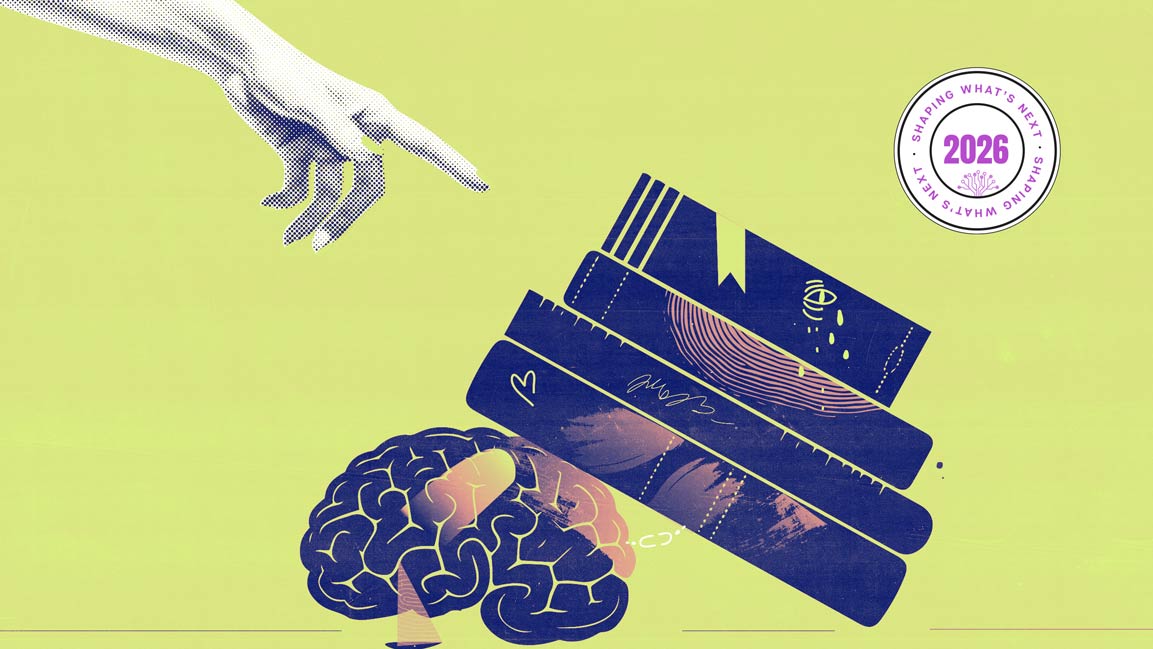
If the past two years were about discovering what artificial intelligence can do, 2026 will be about deciding what it should do, and who is qualified to build, govern, and teach it.
Across classrooms, boardrooms, and policy tables, AI is no longer treated as a futuristic add-on. It is becoming embedded into how software is written, how students are assessed, how institutions certify knowledge, and how enterprises think about risk. However, this shift is also revealing a harsh reality: not all “AI skills” are equal, and not all AI education is genuinely valuable.
According to Prabhu Rajagopal, Professor at IIT Madras, the conversation around AI skills has to begin with fundamentals, not hype.
Programming Still Comes First
Despite the explosion of low-code tools and generative AI platforms, Rajagopal is unequivocal about the most crucial skill students must develop in 2026.
“Programming is the number one skill. Strong coding ability is essential,” he said.
Languages may evolve, frameworks may change, but the ability to think computationally and write robust code remains foundational. Python continues to dominate AI and data science workflows, while JavaScript, especially with ecosystems like Node.js, has become increasingly important as AI moves into full-stack and real-time applications.
Beyond languages, Rajagopal points to modern software platforms such as Unity and advanced development environments as critical. These tools reflect where AI is currently being deployed—in simulations, digital twins, immersive systems, and interactive applications.
The message is clear: AI fluency does not replace software engineering; it amplifies it.
The Role of Institutions
As AI skills proliferate across online platforms, bootcamps, and short-term courses, a bigger question looms: who sets the benchmark for what “real” AI expertise looks like?
Institutions like the IITs, Rajagopal argues, play a central role.
“IIT Madras has been a leader in AI for many years,” he said, pointing to the Robert Bosch Centre for Data Science and Artificial Intelligence, established nearly a decade ago, and India’s first dedicated Department of Data Science offering BTech programs.
Beyond technical training, the institute has invested in increasingly vital areas as AI advances, including ethics, safety, and governance, through initiatives like the Centre for Responsible AI (SERAI).
From policy formulation and capacity building to long-term vision-setting, IITs already shape how AI is developed and deployed in India. By 2026, this role is expected to evolve, particularly as AI certification, regulation, and public trust become increasingly intertwined.
Certifications: Signal or Noise?
The rise of AI certifications has created both opportunity and confusion. For students and professionals alike, the challenge is distinguishing substance from surface-level credentials.
“It depends entirely on the type of certification,” Rajagopal cautioned.
A valuable AI certification, he explains, must go beyond tool usage. Understanding neural networks, model architectures, Transformers, GPT-style systems, foundation models, and the fundamentals of edge computing is essential.
Simply using generative AI tools to produce content does not constitute AI expertise.
“I often hear people say they’ve done an AI course because they used ChatGPT to write something. That is not AI,” he said.
While platforms like Coursera and similar providers can offer meaningful learning opportunities, students must scrutinize the course content carefully. Certifications rooted in fundamentals and theory retain value; those focused only on applications or shortcuts risk becoming obsolete as tools evolve.
Degrees Are Not Dying, They’re Being Rebooted
Amid fears that AI could make traditional degrees irrelevant, Rajagopal offers a more grounded perspective. “Traditional degrees are certainly not losing their value. AI is the icing, but you still need the cake.”
AI cannot replace core disciplinary knowledge in fields like agriculture, infrastructure, aerospace, or energy. Instead, it augments them. In fact, some disciplines are experiencing renewed relevance. Aerospace engineering, for example, is seeing fresh momentum due to space startups, drones, and defense technologies.
AI can identify patterns and assist with simulations, sometimes even replacing traditional computational methods for specific tasks; however, it still relies on an underlying physical understanding. Compute-intensive AI models cannot be applied everywhere, nor can they fully replace domain expertise.
Rather than disappearing, conventional disciplines are being “rebooted and remastered” for the AI era.
How Teaching and Assessment Are Changing
AI’s impact on education is not limited to curriculum content. It is also reshaping how learning is assessed, guided, and governed.
At IIT Madras, AI-driven tools such as Turnitin are already embedded into academic processes. Master’s and PhD students are required to submit AI-based plagiarism reports, ensuring originality and academic integrity.
Intellectual property workflows are also evolving. AI-assisted systems now help evaluate invention disclosures by scanning prior art and estimating originality, an inherently probabilistic process where AI can provide meaningful support.
Another emerging use case is course discovery. With nearly half of undergraduate programs consisting of electives, students face significant pressure to make informed choices early. AI-based tools and startups, some emerging from IIT Madras itself, are experimenting with models that map student interests and career goals to suitable courses.
Yet, Rajagopal is clear-eyed about the limitations. These initiatives remain fragmented and experimental. Faculty training in AI is still limited, and standardization across institutions is minimal.
“There is impact, but very little standardization so far,” he said.
What Changes in 2026
If 2025 was defined by rapid AI adoption, 2026 will be about restraint, responsibility, and resilience.
“Looking ahead in 2026, demand will deepen and diversify,” says Tarun Sharma, Chief Product and Technology Officer at foundit. “Hiring will accelerate for specialized positions in AI governance, compliance, and cybersecurity as enterprises prioritize responsible and secure AI adoption.”
Forecasts suggest that while prompt engineering and GenAI specialist roles will continue to grow, some of the fastest-rising positions will sit at the intersection of technology and risk: AI governance leaders, compliance specialists, AI solution architects, and cybersecurity professionals.
As regulatory scrutiny increases, enterprises will demand explainable, auditable, and secure AI systems, especially in high-stakes sectors.
Cybersecurity, already under strain, will become inseparable from AI deployments, protecting models, data pipelines, and decision systems from manipulation or misuse.
Neeti Sharma, CEO of TeamLease Digital, expects global capability centers (GCCs) to play a decisive role by 2026. Many enterprises will build AI capabilities internally, potentially filling up to half of new AI roles from within their existing workforce.
Yet, specialist talent will remain scarce, particularly in regulated sectors such as BFSI, pharmaceuticals, and manufacturing, where domain-led AI adoption is accelerating.
This imbalance will further elevate the importance of deep skills, credible education, and institutional benchmarks.
The Road Ahead
By 2026, AI will no longer be judged by how impressive it looks, but by how responsibly it is built, how securely it operates, and how well humans are prepared to work with it.
For students, this means mastering fundamentals over shortcuts. For institutions, it means setting standards rather than chasing trends. And for enterprises, it means recognizing that the next phase of AI is not about speed, but about trust.
In that sense, the AI future is not just being engineered. It is being taught, examined, and governed, one skill, one classroom, and one decision at a time.