AI Isn’t Replacing Employees but Rewriting How Work Actually Happens
While one MIT study zooms into the human brain, another zooms out to the entire economy.
News
- Sovereign Wealth Funds Chase AI Infrastructure Boom
- Indian IT Firms See Agentic AI Opening $400 Billion Opportunity
- OpenAI Hires Uber Veteran Prabhjeet Singh for India Push
- India-US Talks Put AI Stack In Focus
- OpenAI Plans Limited GPT-5.6 Rollout After White House Request
- Employers Still Want MBAs Even as One in Three Hands Entry-Level Work to AI
For months, the debate around artificial intelligence has centered around a binary question: Will AI take jobs? Two recent MIT-backed studies and reflections from Indian founders suggest that we may be overlooking the central issue.
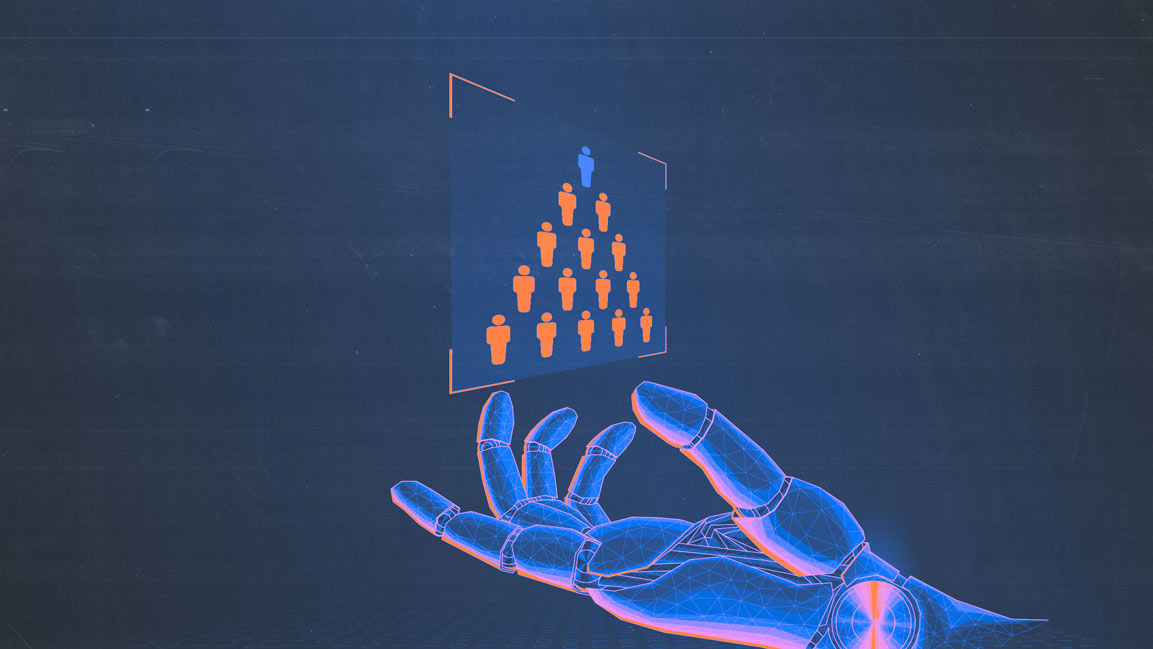
AI is not replacing employees. It is reshaping how work is done—how tasks, decisions, and values move through human brains, teams, and entire functions, often in invisible ways.
Bharath T Rameash, Co-founder and CEO of Adventurus, a madtech company with cohesive ad tech and marketing tech capabilities, recently shared a deceptively simple “test” on LinkedIn. After using ChatGPT at work, he asks himself:
- Can I recreate what I produced yesterday without AI?
- Can I explain why it works?
- Can I improve it beyond what AI suggested?
If the answer is no, he argues, then the work wasn’t really done; it was outsourced.
His reflection aligns uncomfortably well with MIT’s report, Your Brain on ChatGPT: Accumulation of Cognitive Debt. The study tracked participants over several weeks as they wrote essays using three approaches: brain-only, search engines, and large language models like ChatGPT.
The findings weren’t about productivity. They were about cognitive engagement.
EEG scans revealed clear differences in neural activity across writing approaches: participants who relied solely on their own cognition exhibited the strongest and most widespread neural connectivity, indicating greater engagement. Those who used search engines demonstrated moderate levels of brain engagement, while writers assisted by large language models consistently exhibited the weakest brain coupling during the task.
Over time, LLM users struggled to recall or quote from essays they had written just minutes earlier. When asked to write without AI in a later session, many participants struggled. Brain activity linked to memory, reasoning, and ownership had literally decreased.
This isn’t AI replacing a worker; this is AI quietly changing how thinking itself is distributed between humans and machines.
Productivity without Ownership
What’s striking is that the work looked fine. Essays were completed faster. Outputs were coherent. To an external evaluator or a manager scanning deliverables, everything appeared productive. But internally, something had eroded: comprehension, retention, and intellectual ownership.
This is the paradox that modern enterprises face. AI boosts speed, but risks hollowing out the very cognitive muscles that make humans valuable in the first place.
That doesn’t make AI dangerous. It makes unthinking adoption dangerous.
Iceberg Beneath Job Titles
While one MIT study focuses on the human brain, another focuses on the entire economy.
Project Iceberg, an MIT-led initiative, introduces the Iceberg Index, a skills-based measure of how much of an occupation’s wage value overlaps with what AI systems can technically perform.
Its most important finding? The visible AI impact we talk about—developers, data scientists, and tech hubs—is just the tip of the iceberg.
Only 2.2 percent of wage exposure sits in obvious tech roles. Beneath the surface lies a much larger shift: 11.7 percent of wage value, spanning finance, HR, operations, administration, supply chains, and professional services.
These roles aren’t being eliminated. Their workflows are being re-architected.
Supria Dhanda, Co-Founder and Managing Partner at WYSER, an agentic AI venture fund, captured this perfectly on LinkedIn: AI won’t loudly automate jobs; it will quietly reshape entire functions. For a services-led economy like India, with its booming Global Capability Centers (GCCs), this shift will be felt early.
From Task Execution to Decision Scaffolding
Together, the two MIT reports point to a clear message: AI is not replacing employees, but rather becoming the invisible infrastructure actively rewriting how work gets done.
Writing becomes a process of prompting, reviewing, and refining. Analysis becomes interpreting AI-generated insights rather than building them from scratch. Decision-making shifts from intuition to AI-augmented judgment.
This is why founders and enterprises are no longer debating whether to adopt AI. They’re asking how to build AI-native workflows, agentic systems, decision-support rails, and guardrails that ensure humans stay cognitively in the loop.
The real risk isn’t job loss; it is cognitive atrophy at scale.
In this new wave of AI adoption, the winners won’t be defined by how heavily they use AI tools, but by how thoughtfully they design their workflows, ensuring that humans continue to understand the “why” behind decisions, AI is used to accelerate rather than replace critical thinking, and knowledge compounds over time instead of quietly evaporating.
This is where Bharath’s “memory test” becomes more than a personal habit—a warning for organizations. If employees can’t explain, recreate, or improve AI-assisted work, companies may end up with fast-moving teams that don’t actually learn.
And learning, not output, is the real long-term moat.
The Iceberg Index shows that traditional metrics, such as GDP, income, or unemployment, barely explain the extent of AI exposure. That means leaders relying on old dashboards will miss what’s coming.
What’s needed instead is a shift toward skills-first workforce planning, training programs that emphasize judgment, interpretation, and synthesis, and AI systems intentionally designed to support human cognition rather than bypass it.
As Dhanda notes, this moment isn’t about fear; it’s about readiness.
The weather may feel calm today. But beneath the surface, AI is already reshaping how work flows through brains, teams, and economies.
The future of work won’t be decided by whether humans or machines win.
It will be decided by how well we design them to think together.