
Anthropic Backs IISc AI Project to Improve Snakebite Antivenom
An IISc team is using Claude to analyze venom data in a search for targets that could help produce more broadly effective antivenom in India.
Topics
News
- Dassault Tests AI Algorithms on Rafale Fighter Jet
- OpenAI Adds Cheaper GPT-6 Sol and Luna Models
- Anthropic Backs IISc AI Project to Improve Snakebite Antivenom
- Anthropic Launches Claude Opus 5.5 With Lower Cost
- Qualcomm Launches Two Snapdragon Chips Built for On-Device AI
- OpenAI Forms Math Panel After Claiming 100-Plus AI Solutions
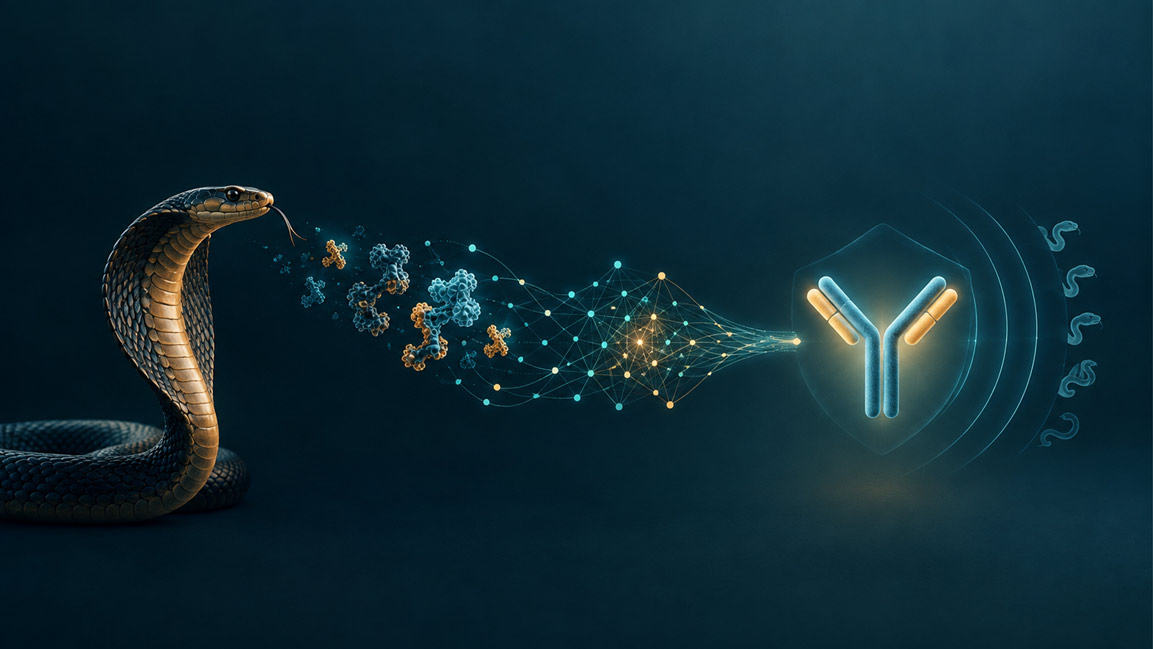
Anthropic is backing researchers at the Indian Institute of Science in Bengaluru who are using its Claude AI model to analyze snake venom data in a search for targets for a broader antivenom.
Kartik Sunagar’s Evolutionary Venomics Lab at IISc was the first research group in India to receive a grant under Anthropic’s AI for Science program, Anthropic India Managing Director Irina Ghose said in a LinkedIn post on Wednesday.
The team is using Claude to curate and annotate years of venom data as it looks for targets that could eventually support a next-generation antivenom effective across India.
The program provides researchers with Claude API credits for high-impact scientific projects.
The work tackles a persistent problem in snakebite treatment in India.
India’s commercial antivenoms are largely produced against the so-called big four snakes: the spectacled cobra, common krait, Russell’s viper and saw-scaled viper.
The venom used in their production is sourced largely from Kanchipuram and Thiruvallur districts in Tamil Nadu, but venom can vary sharply between species and between populations of the same species in different parts of India.
Sunagar’s group has previously documented such geographic differences and found that commercially available antivenoms can perform poorly against some snake populations. In one study, an antivenom failed to neutralize venom from a North Indian common krait in laboratory testing.
The problem has major public-health consequences. An analysis cited by the World Health Organization estimated that snakebite killed about 1.2 million people in India between 2000 and 2019, or an average of 58,000 a year.
Sunagar’s lab has spent years studying how venom composition changes across species, geography and age. Its research has also examined whether conserved parts of toxin proteins could be targeted by treatments capable of neutralizing venom from a wider range of snakes.
The Claude project is separate from another line of work in Sunagar’s lab aimed at developing broader antivenoms.
Earlier this month, IISc researchers and collaborators at the Technical University of Denmark reported a recombinant nanobody-based antivenom that protected against venom from geographically diverse cobra and king cobra species in India. The study was published in Science Translational Medicine.
Anthropic’s AI for Science program provides free Claude API credits to researchers working on high-impact scientific projects. The company expanded its support for scientists in August.
Anthropic has also introduced Claude Science, a separate research application that can work across scientific databases and analytical tools while preserving the code and history behind an analysis.
Claude Science comes with more than 60 curated skills and connectors and access to scientific databases covering areas including genomics, proteomics, structural biology and cheminformatics. Anthropic has not said that Sunagar’s IISc project is using the Claude Science application.