

How Grocery Retail Innovations Change Customer Behavior
Research into new in-store amenities, digital shopping formats, and partnerships reveals their unexpected costs and benefits.
News
- Fired OpenAI Researchers Warn Dismissals Could Chill Safety Work
- ARTEX Developer Closes AI Hacking Tool After Bank Attacks
- AI Redraws Global Race for Quant Talent as Coding Tools Lower Entry Barriers
- AI Dispatch | India Draws Billions Into AI
- AI Bots Now Make Up Half of Traffic to US Fed’s FRED Database
- Musk Blames ‘Oligarchs’ For Delay in Starlink’s India launch
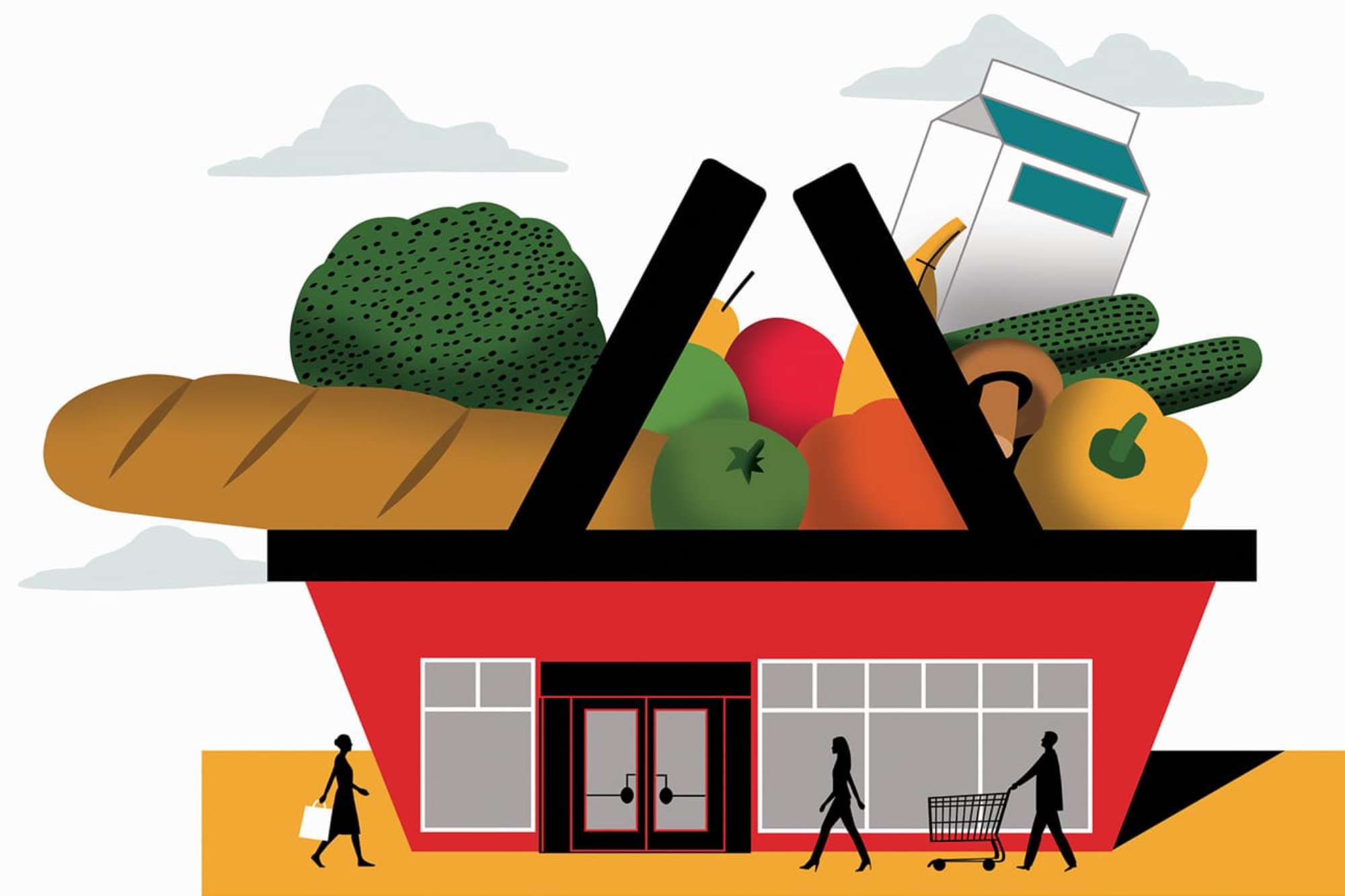
GROCERY RETAILERS ARE RACING to reinvent the customer experience. As omnichannel shopping becomes the norm — with 90% of consumers now purchasing food through both online and offline channels — grocers are deploying new tactics to attract shoppers, build loyalty, and drive profitability. But do these customer experience investments actually pay off?
My research partners and I examined three specific tactics that grocers are increasingly adopting: adding experiential services like bars to existing stores, partnering with third-party delivery apps like Instacart, and launching delivery subscription programs. Through our research, we uncovered how each strategy affects customer spending patterns, hidden operational costs that many retailers overlook, and unexpected benefits that can significantly impact the bottom line.
Our findings challenge conventional assumptions about these popular strategies. While grocers expect straightforward returns on the millions of dollars they invest in customer experience improvements, the reality is more complex. Some tactics deliver surprising windfalls in unexpected areas while others create unforeseen operational burdens that can erode profitability.
Here, I’ll share strategic recommendations based on our research insights to help grocery managers make informed decisions about which customer experience investments will deliver the greatest value for their specific operations and customer base.
Boost in-Store Experience With a Bar or Restaurant
Since the pandemic, grocery retailers have placed an emphasis on revitalizing the in-store experience to reconnect with their customers. One of the most common tactics grocers are deploying is the addition of a bar, restaurant, or cafe to an existing store.
Whole Foods introduced both a restaurant bar and full-service coffee bar in one of its locations in New York City in 2022. Just last year, Texas-based H-E-B reopened its long-standing store in Austin with new indoor and outdoor dining offerings. And Publix is in the middle of rolling out new store prototypes centered around the customer experience, featuring olive bars, outdoor seating, and drinks on tap.
Retailers make these large-scale investments under the assumption that they’ll attract more shoppers, get them to stay in the store longer, and encourage increased spending. Here’s what my research colleagues and I found:
Costs: We know that opening a bar or restaurant requires a high initial investment and can take two to five years to break even. There are additional operating costs, legal regulations related to alcohol sales, and concerns about being able to maintain a family-friendly atmosphere for all customers.
Customers tend to make more impulse purchases and buy more perishables at stores that have a bar or cafe.
Benefits: Our research found that in-store bars create a positive spillover effect for grocery retailers. Following the addition of a bar, both new and existing shoppers ramped up average daily sales volumes by 5.97%, sales expenditures by 6.82%, the number of transactions by 5.76%, and the variety of items purchased by 6.18%. They spent an average of 15.49% more time in stores and increased spending across specific departments, including alcohol and beverages, bakery items, meat and seafood, produce, and snacks.
These findings don’t even consider the revenue generated from the bar itself. From the spillover effect alone, we estimate that — unlike for a stand-alone bar — a retailer can break even on its investment in 17 to 40 weeks.
Unexpected changes: Customers actually decreased their average order size (number of items purchased) by 1.21%, yet the average price per item they purchased increased by 1.71%. So it seems that in-store bars encourage shoppers to visit the store more frequently and purchase more expensive items in slightly smaller batches.
Recommendations: Adding a bar or restaurant to a grocery store is worth the investment, but retail managers will also want to consider how to further enhance operations and profitability after doing so. For example, with the increased foot traffic, retail managers will need to keep the bar, store departments, and checkouts staffed and functioning properly. At the same time, they should recognize that the competitive advantage may diminish as more rivals adopt similar features, making it important to be an early implementer to capture the greatest competitive advantage and to layer on complementary strategies to sustain differentiation.
There is also an opportunity to align inventory strategy with customer shopping behavior: We found that customers tend to make more impulse purchases and buy more perishables at stores that have a bar or cafe. Managers should keep the most in-demand products across impulse and perishable departments fresh and well stocked, easily accessible, and appealing for customers. This might require changing inventory policies to order certain items more frequently and in larger amounts.
The Risks of Partnering With Third-Party Delivery Apps
Another area of immense growth for grocery retailers in recent years has been digital sales and delivery services. Online grocery sales reached $140 billion in 2022 and are expected to surpass $235 billion by 2026.
While some major brands, like Kroger and Walmart, have invested the time and resources to launch their own in-house shopping and delivery apps, many other retailers are partnering with third-party platforms like Instacart, Shipt, and Doordash to get the job done. In fact, roughly 30% of online grocery sales — or $42 billion in 2022 — come through third-party delivery platforms.
Although such partnerships give retailers quick access to e-commerce sales and enable them to fulfill customer demands like same-day delivery, we found that there are a few significant downsides.
Costs: When partnering with third-party apps, retailers have limited control over the quality of service and fulfillment of orders, including the management of independent contractors and shoppers, whose activities may negatively affect the experience of in-store customers. Their access to customer information and ability to address and resolve service issues as they arise are also limited.
Partnering with third-party apps also inherently increases competition among retailers. As customers shop on Instacart, for example, they can browse products from multiple grocers and choose the best price elsewhere. Our research shows that retailers experience a decrease in sales volume by 6.6% and an average loss of four customers per week as a result of app use. In addition, there is a 21.2% drop in impulse purchases, especially in the bakery and floral departments.
Benefits: Third-party delivery apps offer an appealing solution for retailers to develop an online presence quickly, whereas developing an in-house app can require significant capital and years of research and development. There is minimal investment required, since the third-party platform owns the infrastructure, labor, and equipment. Orders are fulfilled through physical store inventory, so there is no need for a separate process to manage the inventory for the app channel.
Unexpected changes: We found a sales dispersion effect for retailers that partner with third-party apps. By sales dispersion, we refer to a shift in the composition of sales such that transactions become smaller in quantity and less frequent but of higher value or for specialty items, changing the mix of what retailers sell. Specifically, in our study, weekly product sales decreased by an average of 1.4% and average order quantity decreased by 6.2%. However, average order price increased by 3.4%, and there was no significant change in weekly sales revenue in stores.
When partnering with third-party apps, retailers have limited control over the quality of service and fulfillment of orders.
So, what do these numbers tell us? After the launch of a third-party app, customers shifted from purchasing popular items and daily essentials (like dairy or produce items) to niche, higher-priced products that are less readily available from competitors. As a result, customers split up their purchases between multiple stores — an effect that’s more pronounced in geographic areas with higher competition. When sales dispersion is high, it can be difficult for retailers to forecast trends and allocate resources and inventory accordingly.
Recommendations: Retailers may want to tread carefully when it comes to third-party apps. The increased exposure to competition leads to unintended consequences where customers can — and do — shop more selectively. One alternative is to emphasize in-store experience and discovery, like Trader Joe’s does. It has taken a “pure offline” strategy, eschewing partnerships with third-party apps and forgoing any online sales or curbside pickup/delivery.
If a retailer does decide to partner with a third-party app, it should prepare for the sales dispersion effect. Taking a proactive approach to inventory management will help a retailer avoid excessive under- or overstocking at department, store, and weekly inventory levels. We found that when a third-party app is launched by a retailer, customers test out the delivery service by purchasing a wider variety of products before they become selective. Thus, overstocking may be beneficial initially, whereas understocking may be effective in the following weeks as customers shift to purchasing niche items.
Our study also showed that inventory pooling at the warehouse — consolidating stock to serve multiple stores from a common source — can hedge the sales dispersion effect, reducing total cycle inventory (that is, the stock held to meet regular demand between replenishments) by an average of 27.14%. This approach allows retailers to use the change in demand patterns to cut costs.
Make the Most of Subscription Programs
From news and entertainment to retail, subscriptions are a common way that customers pay to receive additional convenience from brands. In the grocery sector, that means being able to order groceries online and either pick them up in-store or have them delivered at home.
For example, Kroger charges its shoppers a per-order fulfillment fee of $9.95 to $11.95, depending on the location and time of order, or an upfront payment of $59 per year to join its subscription-based delivery program. Last year, Amazon began offering Prime members who paid an extra $9.99 per month unlimited grocery deliveries on orders over $35 at no additional cost.
Considering that only 15% of people use online grocery subscriptions like these each week, this retail strategy is relatively new and unexplored; many retailers are still trying to understand the economic value of offering subscription programs. My coauthors and I have found that the greatest threat to the success of retail subscription programs is the high cost of serving enrolled customers.
Costs: Subscription programs require additional costs to serve customers, including those related to logistics and the transportation of perishable items and staffing to assemble and deliver orders. This rise in the cost of goods sold is the greatest threat to the profitability of a subscription program.
Benefits: Subscription programs generate substantial increases in overall product sales across customers. When a customer subscribes, their perceived cost of buying their groceries elsewhere goes up, so they’re essentially locked in with the brand they subscribe to — and they end up maximizing their subscription. Product sales and total spending increased by 30%: The frequency and size of home delivery orders ramped up, the number of items per order increased by 55.5%, and weekly order frequency surged by a whopping 113.40%.
In our study, profitability of the subscription program increased by an average of 9.59% from only about half of the subscribers.
Unexpected changes: Subscriptions can cause cannibalization. The other half of subscribers in our study increasingly chose home delivery to stock up on a variety of higher-value items on a frequent basis, forgoing purchasing those items via in-store shopping and pickup. They decreased their profitability by an average of 108.44%.
For these customers, the subscription program allowed them to reduce their own transaction costs that come along with a typical trip to the store, such as time, effort, and transportation. They changed their behavior from shopping in-store to online to offset the upfront fees they incurred when signing up for the program — and this in turn increased the retailer’s cost to serve.
Recommendations: Understanding the true cost to serve customers through subscription programs is critical. Retailers can use this information to determine the optimal subscription fee to charge to ensure the profitability of the program. For example, in our analysis, we found that our focal retailer was undercharging for its subscription fee by more than $30 for a four-month period.
Other operational decisions can help reduce costs to serve too, including using customer purchase data to determine which products to make available through the subscription program, using behavioral nudges in program design, running promotions on specific products, and implementing delivery strategies that pool or batch orders. For example, introducing a small nominal delivery fee, even for subscribers, can discourage excessive small-basket orders while still preserving the convenience value of a subscription. Similarly, offering “delivery day” discounts — encouraging customers who live near one another to select common delivery windows — could increase order batching and route density, thereby improving logistics efficiency and lowering per-order costs.
Finally, we found that subscriber segmentation can be beneficial for designing programs and developing targeted program policies. For example, the customers who increased stores’ profitability post-subscription tended to be more loyal to the brand, and their gains offset the losses from the remaining subscribers. Retailers can segment subscribers by profitability and loyalty, tailoring program benefits to reward and retain high-value customers while managing costlier segments with different policies, thereby enhancing long-term effectiveness and profitability.
Understanding customer behavior is critical for retail success. Our research reveals how customers respond to initiatives by grocery retailers in ways that may be unexpected. And the implications extend beyond grocery aisles. Across sectors, retailers are grappling with similar challenges and investments in omnichannel customer experiences. The key to making the most of new strategies is to understand how customers behave — and how those behaviors translate into operational implications that have real financial outcomes.