

India Ranks No. 2 in AI Usage—But Who Is Being Left Behind?
Anthropic’s data reveals rapid adoption, uneven access, and a new geography of digital labor.
News
- Fired OpenAI Researchers Warn Dismissals Could Chill Safety Work
- ARTEX Developer Closes AI Hacking Tool After Bank Attacks
- AI Redraws Global Race for Quant Talent as Coding Tools Lower Entry Barriers
- AI Dispatch | India Draws Billions Into AI
- AI Bots Now Make Up Half of Traffic to US Fed’s FRED Database
- Musk Blames ‘Oligarchs’ For Delay in Starlink’s India launch
As AI is cast as both savior and saboteur of human labor, a panel at the IndiaAI Impact Summit 2026, titled AI in Work: Humans, AI, or Both?, chose a different entry point: power.
Murugan Vasudevan, CEO of Veddis, started the discussion by asking, “The real question is whose work is undergoing transformation? Who is tracking it? And who is making the decisions?” In essence, productivity isn’t a neutral measure; it carries political significance.
For Shankar Maruwada, Co-founder and CEO of EkStep Foundation, the shift became tangible earlier this month. On February 3, Ethiopia launched an AI-driven agricultural advisory service. Days later, on February 11, Amul—India’s largest milk cooperative—rolled out its own version in Gujarat. Maruwada was on stage before an audience of 1,500 dairy farmers, 60 percent of them women, many managing one or two cows with limited formal training.
The advisory system, accessible via feature phones in Gujarati, draws on five decades of cooperative data—information from millions of farmers and an estimated 30 million cattle. Farmers can now ask, in their own language and voice, how to improve milk yield or address an animal’s illness. “It’s not about better advisory,” Maruwada said. “It’s about women empowerment.” In households where a single sick cow can destabilize family income, AI becomes less an abstract productivity tool and more a buffer against precarity.
Elizabeth Kelly, Head of Beneficial Deployments at Anthropic, described a different inflection point—one unfolding inside technology firms themselves. She recounted how a new internal product, Cowork—similar to Claude-Code but designed for non-technical users—was built in 10 days, almost entirely by AI systems. Nearly half of the company’s engineers, she noted, have not manually coded in recent months. The tools are no longer just assisting work; they are generating the scaffolding for future work.
Yet the velocity of change is uneven. Becky Faith, a Research Fellow at the Institute of Development Studies, offered a ground-level vignette from her public health research. A national health physiotherapist described how Microsoft Copilot transformed her workflow, compressing administrative burdens. But the community health workers she supervised—often older, often women—were resistant to integrating AI into their routines. The anecdote raised questions not only about age and gender in technology adoption, but also about evaluation.
Who is using these tools? Who is being trained? Who is left out?
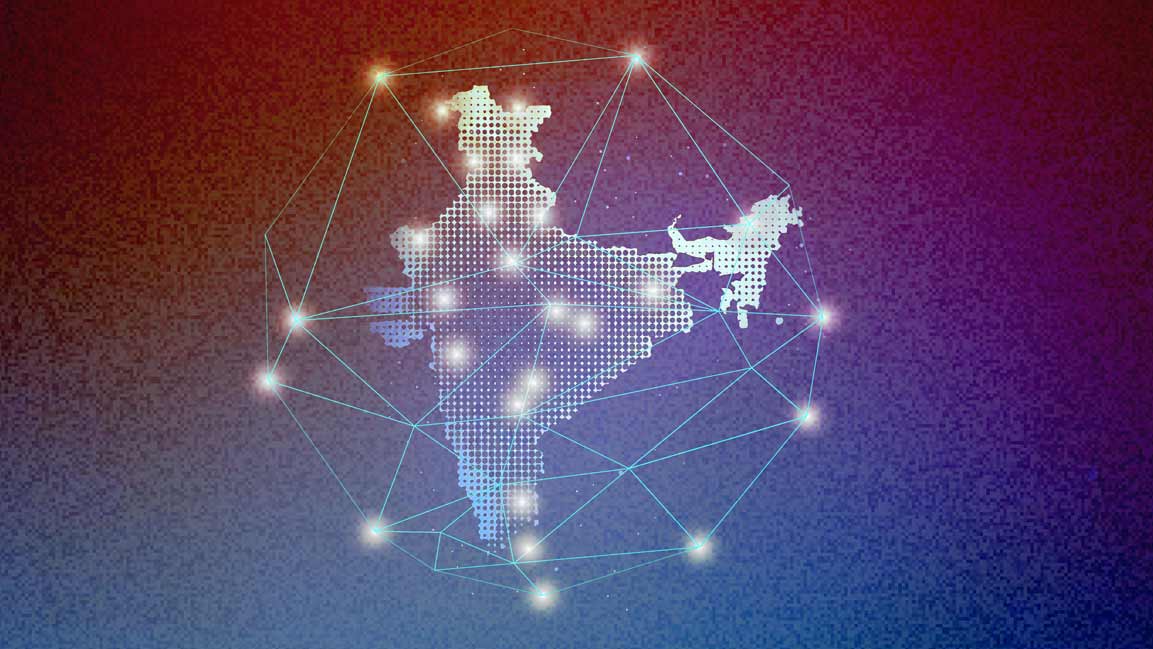
Anthropic’s data on India highlights a clear imbalance. While India is the second-largest user of Claude worldwide, it ranks only 101st among 116 countries for per-capita usage. Adoption is concentrated in Maharashtra, Tamil Nadu, Karnataka, and Delhi, reflecting initial trends in mobile internet spread. Nearly half of the activity, 45%, involves computer and mathematical tasks, the highest percentage globally. Kelly mentioned that certain tasks that previously took four hours now take just 15 minutes.
For a country where roughly 500 million people work in the informal sector, the implications are complex. India has already absorbed seismic technological shifts over the past two decades, from fax machines to smartphones to digital payments. Maruwada expressed cautious optimism that AI, too, will generate new categories of work, particularly in the gig economy, which has expanded from near invisibility 20 years ago to millions today.
Still, the panel returned to Vasudevan’s original provocation. AI may increase productivity. But whether it broadens opportunity or entrenches divides depends on design choices, institutional accountability, and the distribution of voice. The future of work, the panel suggested, will not be decided by humans or AI alone—but by who gets to shape the terms of their collaboration.