


Skyroot’s Vikram I Moves Closer To Orbital Launch
The Hyderabad startup’s Mission Aagaman will test Vikram-I in orbit, carry domestic and international customer payloads and gather flight data Skyroot says cannot be fully replicated on the ground.
Topics
News
- Fired OpenAI Researchers Warn Dismissals Could Chill Safety Work
- ARTEX Developer Closes AI Hacking Tool After Bank Attacks
- AI Redraws Global Race for Quant Talent as Coding Tools Lower Entry Barriers
- AI Dispatch | India Draws Billions Into AI
- AI Bots Now Make Up Half of Traffic to US Fed’s FRED Database
- Musk Blames ‘Oligarchs’ For Delay in Starlink’s India launch
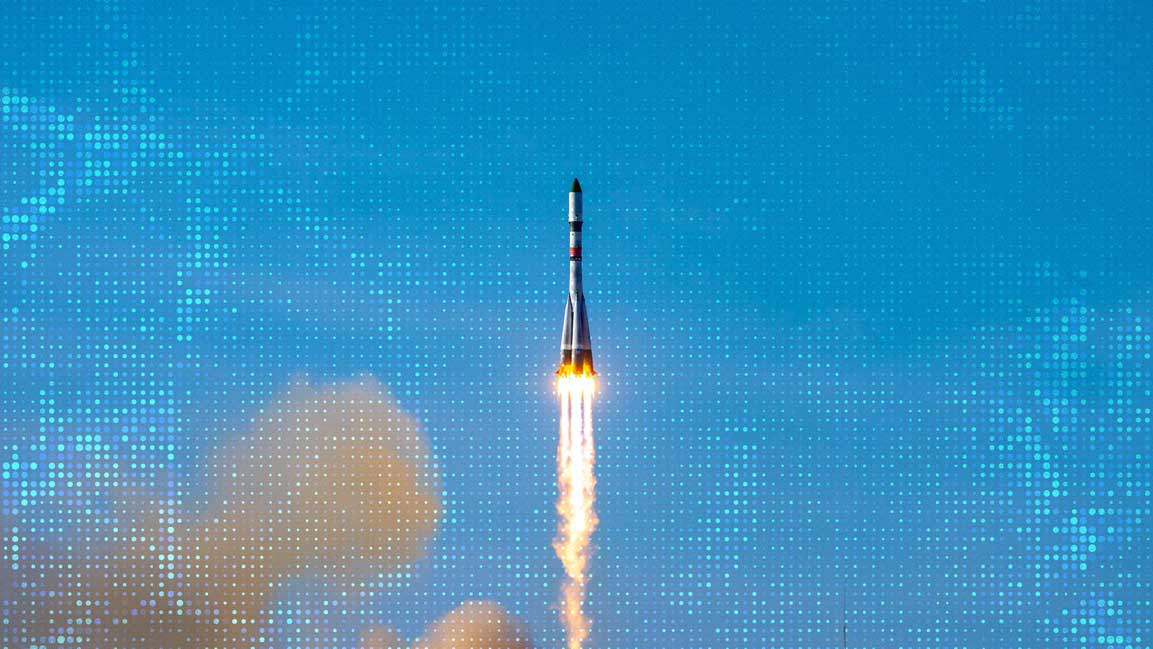
Skyroot Aerospace is preparing to launch Vikram-I, India’s first privately built orbital rocket, between July 12 and August 4 from the Satish Dhawan Space Centre in Sriharikota, Reuters reported.
The maiden orbital test flight, named Mission Aagaman, will mark the first attempt by an Indian private company to place a satellite in orbit, the report said.
The Hyderabad-based startup told The Times of India that Vikram-I will lift off from the first launch pad at Satish Dhawan Space Centre, subject to final assembly and testing at the site, along with weather, safety and range clearances.
Skyroot said all stages of Vikram-I have been integrated and stacked at the launch pad. The rocket is a seven-storey, multi-stage launch vehicle designed to carry payloads of up to 350 kg to low Earth orbit.
Skyroot’s website says the rocket is built for small-satellite launches and uses an all-carbon composite structure, reliable solid-fuel boosters and a 3D-printed liquid engine.
The maiden mission will target a 450-km orbit at a 60-degree inclination. The test flight will gather real-time flight data across propulsion, stage separation, guidance, navigation, control and overall vehicle performance, Skyroot told TOI.
“The single most important objective of Mission Aagaman is to capture the real in-flight performance data from every system on Vikram-1,” Pawan Kumar Chandana, Co-Founder and Chief Executive Officer of Skyroot Aerospace, told TOI.
“This data cannot be fully replicated through ground testing,” Chandana said, adding that the results will help validate the company’s designs and guide later vehicle development.
The mission will be partly commercial and carry a mix of domestic and international customer payloads. Skyroot expects to begin full commercial flights after one or two successful orbital demonstrations.
Mission Aagaman will be Skyroot’s second flight after Vikram-S, a suborbital rocket launched on November 18, 2022.
Isro says Vikram-S was the first launch vehicle built by a private company in India and was authorized by IN-SPACe.
Naga Bharath Daka, Skyroot’s co-founder and chief operating officer, told TOI that Vikram-S had validated the foundation of the company’s technology stack, while Vikram-I marks its biggest step toward a reliable commercial launch program.
Skyroot is positioning its “Cab to Space” model as a dedicated launch service for small-satellite operators seeking precise and frequent access to orbit, TOI reported.
The launch comes as India opens its state-dominated space sector to private companies and seeks to expand its space economy to $44 billion by 2033, Reuters reported.