Climate Change
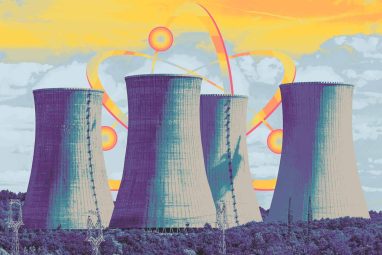
Adani Power Sets Up Nuclear Subsidiary
Backed by legislative reform and budget support, nuclear power is emerging as India’s next big private-sector frontier in clean baseload energy.



Backed by legislative reform and budget support, nuclear power is emerging as India’s next big private-sector frontier in clean baseload energy.
Proposed law would replace decades-old statutes and allow private companies to build and operate nuclear facilities while keeping sensitive activities under state control.

A handful of high-profile companies have explicitly backtracked on previous sustainability commitments in the wake of the new administration’s hostility and some — most notably some big law firms — have fully capitulated. But the vast majority have just gone silent.

To feed our growing economy, humans consume more than 100 billion tons of natural resources per year, or roughly 11 tons of natural resources for every person on Earth. That includes more than 42 billion tons of nonmetallic minerals, 23 billion tons of biomass, 15 billion tons of fossil fuels, and 10 billion tons of metal ores.
While the large differences in the two companies’ CO2 emissions are partly the result of the size difference between them, those gaps are mostly due to where they sit on the value chain: BASF manufactures a broad range of chemical products, including basic chemicals, while Henkel purchases chemical raw materials to incorporate into its final products.