


Mozilla Names Anthony Enzor-DeMeo CEO as Firefox Strategy Shifts Toward AI
Leadership change comes as the browser maker repositions around user-controlled AI and privacy.
Topics
News
- Fired OpenAI Researchers Warn Dismissals Could Chill Safety Work
- ARTEX Developer Closes AI Hacking Tool After Bank Attacks
- AI Redraws Global Race for Quant Talent as Coding Tools Lower Entry Barriers
- AI Dispatch | India Draws Billions Into AI
- AI Bots Now Make Up Half of Traffic to US Fed’s FRED Database
- Musk Blames ‘Oligarchs’ For Delay in Starlink’s India launch
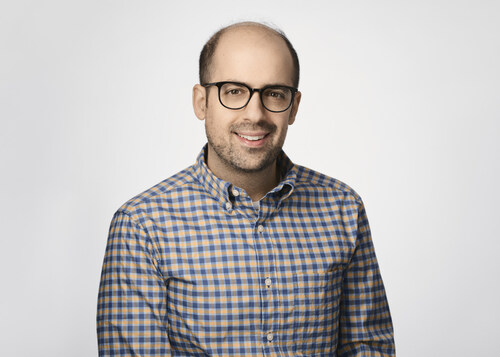
Photo courtesy of Mozilla.
Mozilla Corp., the maker of the Firefox browser, has appointed Anthony Enzor-DeMeo, the former general manager of Firefox, as chief executive officer, effective immediately, as the company recalibrates its browser strategy amid rapid shifts driven by artificial intelligence and changing privacy expectations.
Enzor-DeMeo replaces Laura Chambers, who has served as interim CEO for nearly two years and will return to Mozilla’s board of directors.
Chambers is credited with steadying the organization during a period marked by disruption from AI-driven search, regulatory scrutiny, and an ongoing antitrust case, while also delivering double-digit growth in Firefox’s mobile business and broadening revenue streams beyond search.
Alongside the CEO appointment, Mozilla announced a senior marketing change. John Solomon, a former Apple and Beats executive, will take over as chief marketing officer, with a mandate to strengthen Mozilla’s positioning as a user-choice alternative in a browser market increasingly shaped by platform lock-in.
Enzor-DeMeo’s elevation comes as Mozilla expands its push into optional, user-controlled AI features, including assistants that allow users to choose between models rather than rely on default integrations.
The company has framed this approach as a contrast to more tightly coupled AI strategies pursued by larger technology rivals.
In his first blog post as CEO, Enzor-DeMeo said Mozilla’s ambition is to become “the world’s most trusted software firm” at a time when confidence in Big Tech is under pressure.
He outlined a three-part strategy focused on giving users greater control over privacy, data, and AI use; ensuring transparency in monetization and opt-out mechanisms; and evolving Firefox into what he described as a trusted, modern AI-enabled browser.
“We will measure our progress against a double bottom line,” Enzor-DeMeo wrote, adding that Mozilla must advance its mission while succeeding commercially.
Over the next three years, that will include investing in AI aligned with the Mozilla Manifesto and further diversifying revenue beyond search, he said.
Mozilla has said it plans to launch an “AI Mode” in Firefox in 2026, allowing users to select models such as ChatGPT, Mistral, or open-source alternatives.
The approach stands in contrast to browsers such as Google Chrome and Microsoft Edge, which are increasingly integrated with their parent companies’ AI systems.
Recent Firefox updates have included Tab Groups, Vertical Tabs, integrated AI chatbots, custom wallpapers, PDF editing tools, and visual search, reflecting Mozilla’s effort to modernize the browser while preserving its emphasis on user choice and independence.