


India, Malaysia Bet on Semiconductors to Deepen Ties
Leaders sign 11 agreements during Modi’s Putrajaya talks, putting semiconductor manufacturing, testing and digital cooperation at the center of a broader trade and defense push.
News
- Fired OpenAI Researchers Warn Dismissals Could Chill Safety Work
- ARTEX Developer Closes AI Hacking Tool After Bank Attacks
- AI Redraws Global Race for Quant Talent as Coding Tools Lower Entry Barriers
- AI Dispatch | India Draws Billions Into AI
- AI Bots Now Make Up Half of Traffic to US Fed’s FRED Database
- Musk Blames ‘Oligarchs’ For Delay in Starlink’s India launch
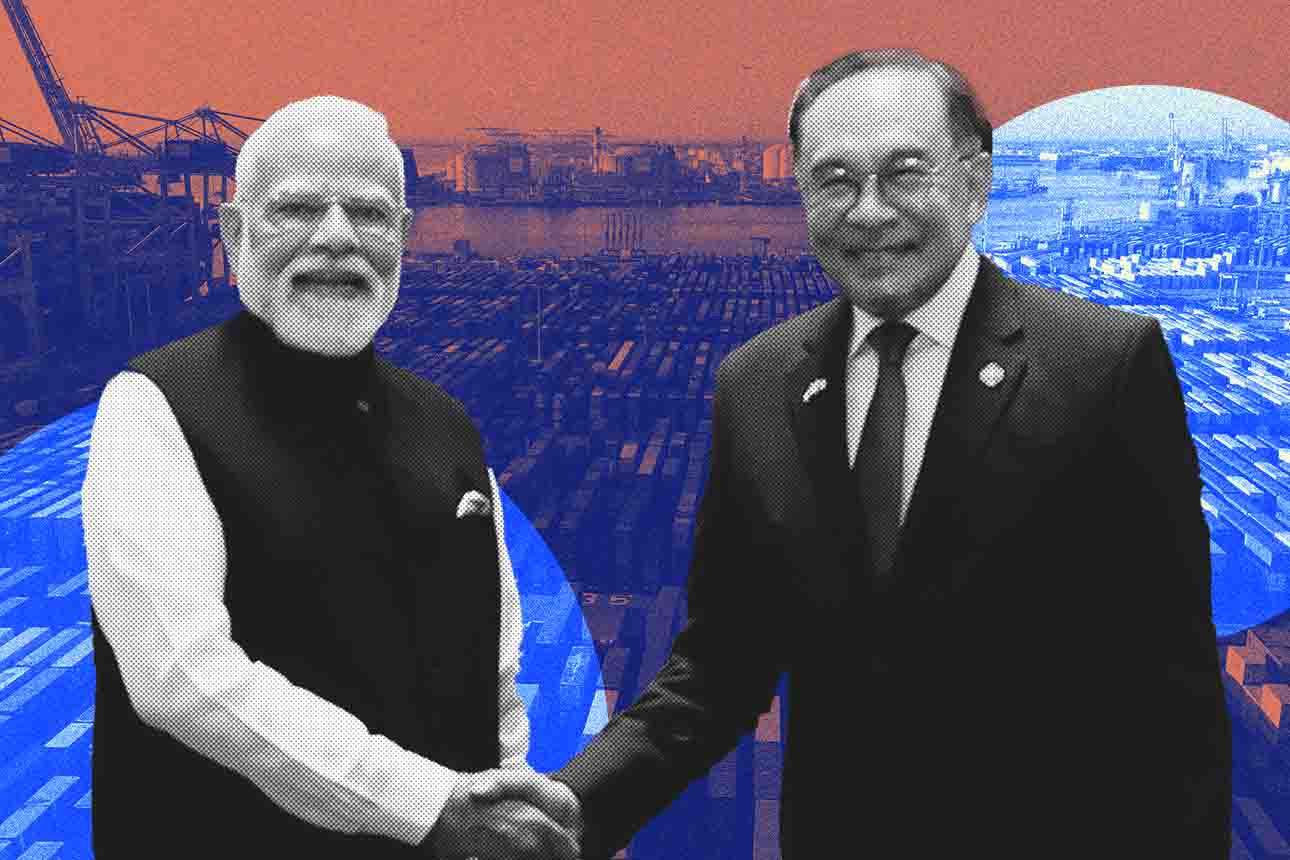
India and Malaysia agreed to deepen cooperation in semiconductors, digital technologies, defense and trade during Prime Minister Narendra Modi’s weekend visit to Malaysia, as both sides look to anchor themselves more firmly in global technology supply chains.
Modi met Malaysian Prime Minister Anwar Ibrahim in Putrajaya, where the two leaders held bilateral talks and oversaw the signing of 11 agreements across priority sectors, according to official statements released by both governments on Sunday.
A central outcome of the visit was a semiconductor cooperation framework, reflecting Malaysia’s position as a major player in global chip assembly, testing and packaging, accounting for about 13% of worldwide semiconductor trade.
The framework is intended to support joint ventures spanning chip manufacturing, testing and packaging, as India accelerates efforts to build domestic semiconductor capacity and reduce supply-chain vulnerabilities.
The two countries also announced the creation of the Malaysia-India Digital Council, a new institutional platform aimed at expanding cooperation in fintech, e-governance, cybersecurity, artificial intelligence and digital public infrastructure.
Officials said the council would serve as a coordination mechanism for government agencies and industry to translate political commitments into commercial projects.
“Had an excellent meeting with PM Anwar Ibrahim at Seri Perdana earlier today,” Modi said in a post on X on 8 February. “India and Malaysia are maritime neighbors who have always enjoyed a close friendship. We reviewed developmental cooperation in sectors like trade, infrastructure, energy, IT, biotechnology and more.”
Trade and payments featured prominently in the talks. Anwar said both governments were working to expand local-currency settlement using the Indian rupee and Malaysian ringgit and expressed confidence that bilateral trade would exceed last year’s $18.6 billion.
The two sides also signed an agreement to link digital payment systems, aimed at easing cross-border transactions for businesses, tourists and students.
In energy, the leaders reviewed ongoing investments by Malaysian state energy group PETRONAS and renewable energy arm Gentari in India, particularly in renewables and green hydrogen.
Both sides said there was scope to scale up cooperation in large solar projects, while Malaysia welcomed India’s leadership of the International Solar Alliance.
The joint statement also highlighted cooperation in skills and research, citing links between IIT Madras Global and Malaysia’s Advanced Semiconductor Academy, as well as industry partnerships between the Indian Electronics and Semiconductor Association and the Malaysia Semiconductor Industry Association.
On trade architecture, Modi and Anwar reaffirmed the importance of the Malaysia–India Comprehensive Economic Cooperation Agreement and the ASEAN–India Trade in Goods Agreement, welcoming the ongoing review of AITIGA to make it more aligned with current global trading conditions.
Defense cooperation formed another pillar of the visit. India and Malaysia have conducted five joint military exercises over the past five years, and officials said collaboration is expected to expand further following Modi’s Southeast Asia engagements.
The agreements build on the Comprehensive Strategic Partnership the two countries signed in 2024, and position India and Malaysia as closer partners in digital technologies and semiconductors at a time when governments across Asia are seeking to rebalance supply chains and reduce reliance on single-country manufacturing hubs.