
India to Shape AI Summit Around Shared Resources, Safety
New Delhi aims to push common AI standards, inclusive access and real-world deployment for emerging economies.
Topics
News
- TCS Ties Up With Anthropic to Push Claude Into Enterprise AI
- Karnataka Shortlists 256 Deeptech Startups for ELEVATE NxT Finale
- Reliance-Backed Addverb Eyes $100 Million for Robotics Push
- Anthropic Releases Claude Fable 5 and Mythos 5
- Meta to Lease First AI Data Center in India From Reliance
- Musk Says Space AI Data Centers Are Within Reach as SpaceX Nears IPO
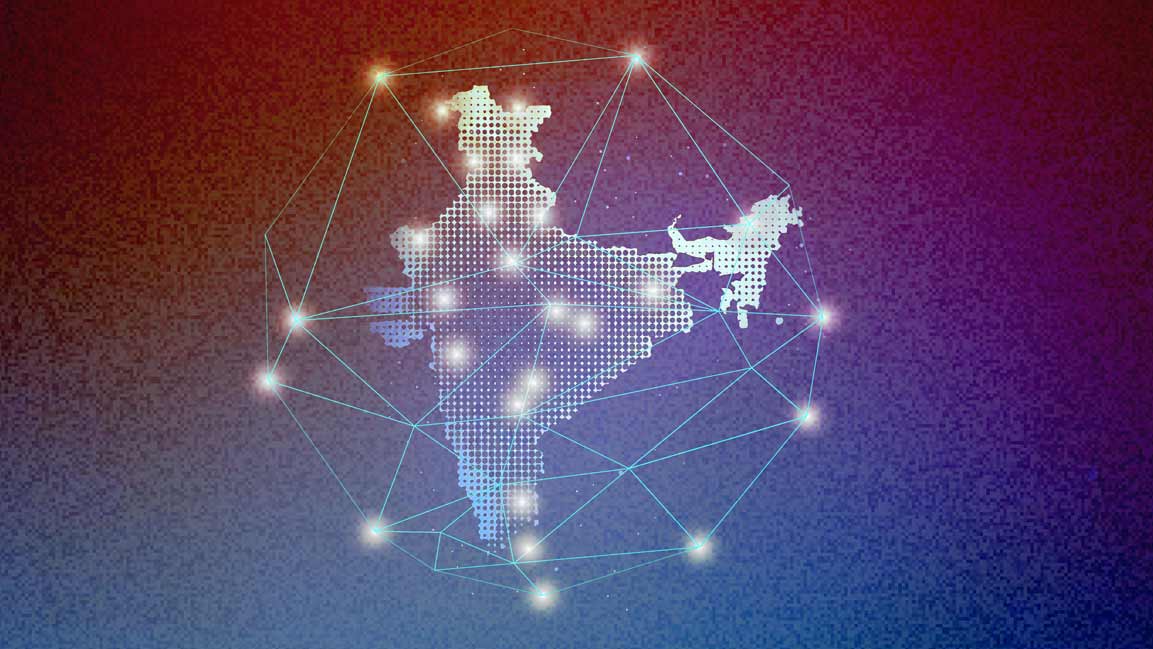
India is seeking to build global consensus on artificial intelligence standards at an international summit this month, emphasizing open access, safety and ethical use, The Economic Times reported, citing IndiaAI Mission Chief Executive Abhishek Singh.
The push will take shape at the five-day India AI Impact Summit beginning 16 February, where New Delhi plans to position itself as a convenor between advanced and developing economies on how artificial intelligence should be deployed responsibly at scale, Singh told the newspaper.
At the center of India’s proposal is the creation of open-access AI resources intended to accelerate adoption of the technology across sectors and geographies, particularly in countries that lack the capital and infrastructure to build or buy frontier systems.
“The first is an open-source repository of AI solutions for key sectors such as agriculture, healthcare and education that can be used by all countries, especially those in the Global South,” Singh said, according to The Economic Times. The aim, he added, is to reduce entry barriers for nations shut out of high-cost AI models.
A second pillar, referred to as a “Trust Commons,” will focus on safeguards around AI deployment, including bias mitigation, regulation of deepfakes and watermarking of AI-generated content. India is also proposing a common funding facility to support these initiatives, which Singh said would be presented to global leaders during the summit.
Singh, who also serves as an additional secretary in the Ministry of Electronics and Information Technology, said India will join the US-led Pax Silica partnership, an initiative aimed at securing supply chains for semiconductors, AI infrastructure, critical minerals and advanced manufacturing.
The government’s approach to AI development remains deliberately restrained. Singh said India is not pursuing trillion-parameter frontier models, arguing instead that most domestic requirements can be met using smaller, domain-specific systems trained on Indian datasets.
“SLMs and smaller models are perfectly okay,” he said.
That view aligns with the Economic Survey 2025–26, tabled on 31 January, which cautioned against India pursuing capital- and energy-intensive frontier AI models given constraints around compute capacity, energy availability and infrastructure.
While The Economic Times report focused on the geopolitical and policy dimensions of the summit, the government’s outreach arm has framed the event as a people-first exercise. A Press Information Bureau note said the India AI Impact Summit was discussed during a 6 February episode of Digital India – Ask Our Experts, featuring Singh.
According to the PIB, the discussion emphasized AI as a technology already reshaping how Indians learn, work and access services, rather than a distant or abstract innovation.
The summit aims to move global AI conversations “from intent to impact,” Singh said, with practical use cases across education, healthcare, agriculture, governance, startups, services and employment, particularly in developing economies.
“Artificial Intelligence is not meant to replace people; it is meant to empower them,” he said, adding that while some tasks may change, AI is expected to generate new jobs, skills and opportunities. Citizens, he said, should focus on AI literacy, adaptability and continuous learning.