
The Leadership Skill That Matters Most Now
As conflict disrupts supply chains and economic risks deepen, leaders are finding that empathy is not a soft trait but a harder business discipline, shaping judgment, risk control, and decision-making under pressure.
News
- AI Now Handles More Than a Third of India’s Entry-Level Work
- AI Matches Doctors in Simulated Clinical Tests
- India’s AI Talent Crunch Is Sharpest in GenAI
- Reliance Turns Jio Into Its AI Distribution Engine
- AI Dispatch | AI Access Takes Center Stage at G7
- Google Gemini Co-Lead Noam Shazeer Leaves for OpenAI
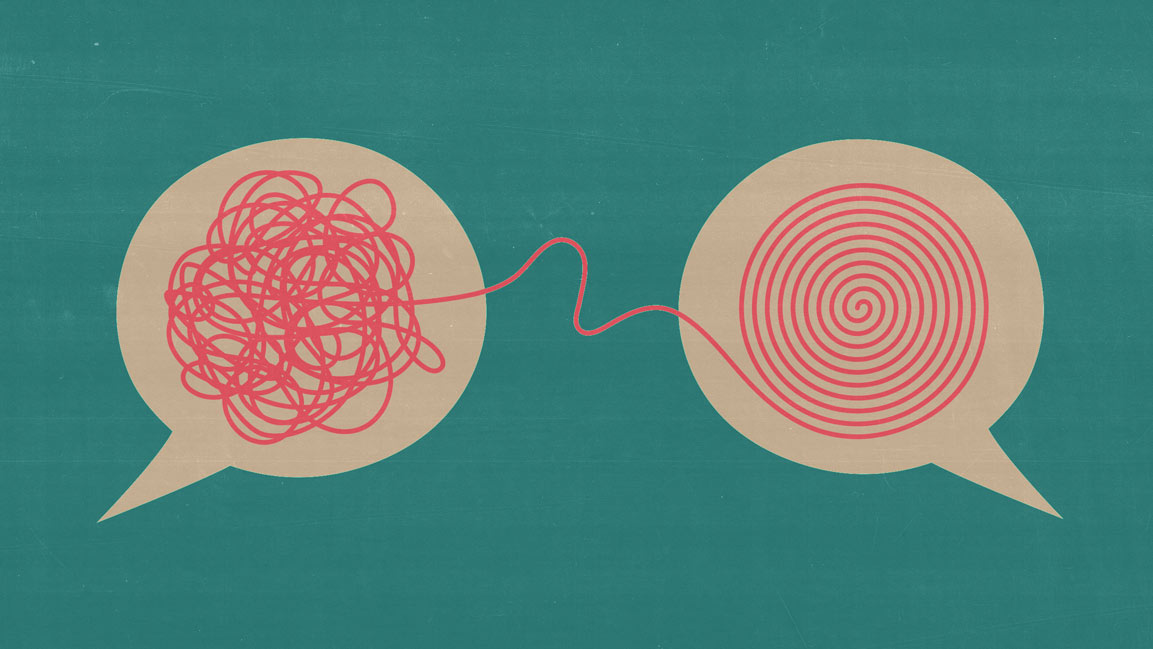
[Image source: Chetan Jha/MITSMR India]
Since 28 February, conflict involving the United States, Israel, and Iran has repeatedly disrupted the Strait of Hormuz, one of the world’s most important energy corridors, sending fresh volatility through shipping, oil markets, and supply chains. Oil flows remain impaired even during brief reopening windows, and the International Monetary Fund has warned that a deeper, more prolonged shock could push global growth into recession territory.
For companies, this is not a distant macroeconomic story. It arrives in the form of delayed shipments, higher input costs, anxious clients, and employees already under strain. In such an environment, leadership is tested differently. The question is not simply whether executives can execute. It is whether they can make sound decisions when information is incomplete, pressure is rising, and trade-offs cannot be avoided.
The pressure on leaders is no longer episodic. Supply-chain shocks, AI-led workflow change, cybersecurity threats, cost scrutiny, and employee fatigue now often arrive together. That has changed what leadership judgment requires. Executives are not only deciding what to cut, where to invest, or how quickly to respond. They are also deciding whose information is trusted, which signals are escalated, and how much strain an organization can absorb before performance begins to break.
That is where empathy enters the frame as a business variable.
Empathy has traditionally been positioned as a communication skill. That framing is increasingly inadequate. In volatile, interconnected environments, empathy functions as a mechanism for understanding how pressure manifests across systems before it escalates into failure. It helps leaders understand how uncertainty, operational pressure, and technological change are affecting employees, customers, teams, partners, and systems before those strains become visible breakdowns.
That matters because many organizational failures do not begin as formal risks. They begin as weak signals: a team that stops escalating concerns, a customer relationship held together by one overextended manager, a cyber or compliance concern that remains local, or a workforce stretched too thin to adapt to another process change.
Empathy, treated seriously, improves the flow of that information upward.
Rajesh Chhabra, General Manager for India and South Asia at Acronis, a cybersecurity and data protection firm, says that the shift is practical, not philosophical.
“Empathy is no longer a soft skill but a strategic requirement that directly affects long-term value and business continuity,” he says.
In businesses shaped by hybrid work, AI-led change, cyber risks, and tightly interconnected systems, that argument carries operational weight. Understanding the pressures on employees, customers, and partners is no longer separate from managing risk. It is part of it. But Chhabra also draws a hard line between good intentions and real organizational design.
“It must be integrated into decision-making, systems, and procedures rather than relying solely on intent.”
That distinction matters because much of the current debate turns on precisely that gap. Many leaders speak the language of empathy. Far fewer build it into how decisions are actually made.
For Sagarika Chakraborty, Chief Executive Officer for India and the Gulf and Global Head of Investigations at IIRIS Consulting, a risk advisory, investigations, and security intelligence firm, the issue is best understood through the lens of what she calls “People Risk.”
This is where empathy moves from culture language into risk management. Employees closest to customers, operations, technology rollouts, and compliance issues often see stress points before senior leaders do. But those signals travel only when people believe difficult information can move upward without penalty.
“The question is not whether leaders sound empathetic, but whether empathy is functioning as a genuine risk control,” she says.
That framing moves the discussion toward exposure. Organizations that embed empathy into their decision-making are, in her view, better equipped to detect risks that often remain invisible until they turn into crises. She lists them with unusual clarity: “Attrition of critical talent, suppression of early warning signals, ethical failures that fester in silence, and the reputational damage that follows.”
The reverse pattern is just as telling. Where empathy exists only as language, the symptoms are visible long before leaders are prepared to admit it. “High attrition, low psychological safety, escalating grievances, and leaders who are consistently surprised by crises that their teams saw coming.”
This is where the argument moves beyond the usual leadership discussion. The real trade-off is not between empathy and toughness, but between empathy and a narrow view of financial discipline that treats people primarily as cost centers rather than sources of intelligence.
That tension becomes most visible during periods of stress, when companies are under pressure to move quickly, preserve margins, and reassure investors. The assumption that empathy and financial discipline are somehow opposed remains common. Chakraborty rejects it outright.
“In People Risk, they are not. They are, in fact, deeply interdependent.”
Her point is not sentimental but economic. In her experience, some of the most expensive decisions are the ones taken in moments of pressure when empathy is deliberately set aside. The costs do not vanish. They are simply deferred, often into forms that balance sheets register only later.
She points to “the departure of people who carried institutional memory, the collapse of client relationships that had been held together by individuals rather than systems, and the cultural damage that took years to repair.”
In those situations, the financially hard-headed decision may win the immediate argument while losing the larger one.
The strongest test of empathy is not whether leaders avoid hard decisions. It is whether they widen the decision set before the hardest option becomes unavoidable. In cost cycles, that can mean testing redeployment, shift redesign, role changes, temporary operating adjustments, or customer reprioritization before moving directly to layoffs or blunt cuts.
Prabhleen Kaur, Deputy CHRO at RSB Global, a global engineering company that designs and manufactures automotive components and industrial systems, describes the same balance from an operational vantage point.
“Financial priorities do take the lead,” she says. “But empathy still plays a role in how decisions are approached.”
That role is often most visible before the final decision is made, in the period when alternatives still exist and managerial imagination has not yet given way to administrative action.
“It pushes leaders to look beyond immediate cost and consider the wider impact on teams and long-term stability. It also ensures that alternatives are explored before taking tougher calls.”
That is not a vague aspiration. In practice, it can mean redeployment, adjusting roles, or reworking operations rather than moving straight to workforce reduction.
Kaur’s example from the pandemic gives the argument real business texture. Faced with demand fluctuations and cost pressure, the company redeployed employees across functions, adjusted shifts, and optimized production schedules.
“This approach required more coordination, but it helped retain trained employees and avoid the disruption of rehiring later,” she says.
When demand stabilized, the company was able to scale without having to rebuild from scratch. Empathy, in that case, did not merely improve morale or soften internal messaging. It preserved capabilities, shortened recovery time, and reduced long-term cost.
That also helps clarify the limits of empathy. In layoffs or restructuring, empathy often cannot alter the need for the decision itself. Once a business has reached that point, the room for change is already narrow. Several leaders make the same underlying argument: by the time a restructuring is announced, the decisive failure usually happened earlier.
“By the time a restructuring is being announced, empathy’s window to alter the decision has usually closed,” Chakraborty says.
That line gets to the heart of the matter. Many corporate crises are preceded by long periods in which signals existed but did not travel. Employees closest to emerging problems did not feel safe enough to escalate them. Middle layers filtered uncomfortable truths. Early course corrections were possible, but never seriously considered.
Seen this way, empathy is not mainly about how decisions are communicated after the fact. It is about whether an organization can hear difficult information early enough to act on it.
Gurtej Singh Chawla, Director of Marketing at Innova Solutions, a global technology and talent solutions company, points to how visible the gap can become once cost pressure takes over.
“Empathy is visible in branding, internal communication, and employee initiatives, but tends to weaken when decisions involve cost optimization,” he says.
The contradiction is especially sharp in layoffs. Chawla notes that during the global wave of job cuts in 2022 and 2023, many technology employees were laid off. Some companies offered extended healthcare, severance, and transition support. Others moved abruptly, with far less regard for how the decisions would be experienced internally and externally.
The difference was not just moral. Layoffs are also a test of whether employees believe the organization’s stated values survive pressure. Severance, healthcare support, redeployment assistance, manager communication, and the treatment of remaining employees all shape how leadership credibility is judged after the cuts.
Where the process is abrupt or opaque, the damage can extend beyond those who leave. Remaining employees may become more cautious, less willing to speak up, and less confident that leadership will handle future shocks with fairness.
And that, in turn, exposes another weakness in the corporate conversation around empathy. Leaders may sincerely believe they are empathetic, yet the people receiving their decisions often experience something else.
“Empathy cannot be self-certified,” Chakraborty says.
That line lands because it shifts authority away from leadership self-image and toward employee experience. Empathy is not what a leader believes about their own intent. It is what the organization on the receiving end experiences as real. In many companies, however, employees lack safe channels to provide honest feedback upward.
The problem, she argues, is structural rather than personal. Systems often reward agreement and penalize candor. Without mechanisms for upward feedback, leaders receive a cleaned-up version of reality, one in which dissent is muted, discomfort is delayed, and warning signals arrive too late.
Kaur sees the same distortion in day-to-day operations.
“What is said at the top doesn’t always translate the same way on the ground,” she says.
As decisions pass through managerial layers, intent is diluted, reinterpreted, or simply lost. That is one reason why stated values and lived experience so often diverge inside large organizations.
The institutional gap is measurement. Companies have become disciplined in tracking revenue, utilization, margin, productivity, attrition, customer retention, and delivery timelines. Far fewer apply the same discipline to the leadership behaviors that determine whether teams speak up early, absorb change, and stay engaged through disruption.
Chawla points to a basic weakness in how organizations assess leadership. He says fewer than one in five organizations formally “measure empathy or employee experience in leadership metrics.”
Financial and operational indicators continue to dominate. The result is that empathy remains dependent on individual leaders’ instincts rather than being embedded in systems, incentives, and performance expectations.
Vishal Chaudhary, Executive Director at Dexian, a staffing, IT, and workforce solutions company, argues that the next stage will require precisely that shift.
“The difference is whether empathy drives organizational policies or whether empathy merely drives the way an organization communicates about its policies,” he says.
That is a useful distinction because it separates symbolic empathy from operational empathy. Some organizations are beginning to link empathy to retention, productivity, and engagement. But consistency remains elusive. The question is not whether empathy appears in leadership speeches, but whether it changes policy design and the quality of choices.
In India, the picture is mixed. Leadership often places a strong emphasis on relationships and personal connection, which can produce genuine strength in how teams are managed.
Chakraborty describes this as a “genuine relational warmth” that is culturally embedded. “The investment in personal relationships, in the well-being of immediate teams, in the human being behind the role, these are qualities I have observed,” she says.
Yet that strength is accompanied by a structural weakness. Empathy is too often treated as temperament rather than competency, as though it were an individual trait rather than a capability that can be built, measured, and expected.
Chakraborty puts the gendered dimension plainly: “Women leaders are expected to demonstrate it as a baseline; men who do are treated as exceptional.”
That framing makes empathy harder to institutionalize because it keeps the quality trapped inside personality rather than leadership design.
Kaur describes Indian leadership as being in transition. Awareness has risen, especially since the pandemic, but consistency remains uneven.
“High-pressure environments and performance-driven cultures continue to shape decision-making, even as younger leaders push for more open communication,” she says.
Chhabra’s view is similar. Indian leaders are increasingly aware of the importance of empathy, but the way it is applied still varies sharply across organizations. For it to matter in practice, he says, “it must be applied uniformly, not selectively.”
The larger test for companies, then, is not whether leaders can sound empathetic when conditions are stable. It is whether empathy survives pressure, enters policy, improves the flow of difficult information, and changes the quality of decisions.
In that sense, empathy is not a substitute for hard choices. It is one of the disciplines that makes hard choices better informed.