

AI Now Handles More Than a Third of India’s Entry-Level Work
AI is handling 37% of entry-level tasks in India, forcing employers to rethink hiring, training and the skills they value in young workers, a Cognizant-Pearson study found.
News
- Fired OpenAI Researchers Warn Dismissals Could Chill Safety Work
- ARTEX Developer Closes AI Hacking Tool After Bank Attacks
- AI Redraws Global Race for Quant Talent as Coding Tools Lower Entry Barriers
- AI Dispatch | India Draws Billions Into AI
- AI Bots Now Make Up Half of Traffic to US Fed’s FRED Database
- Musk Blames ‘Oligarchs’ For Delay in Starlink’s India launch
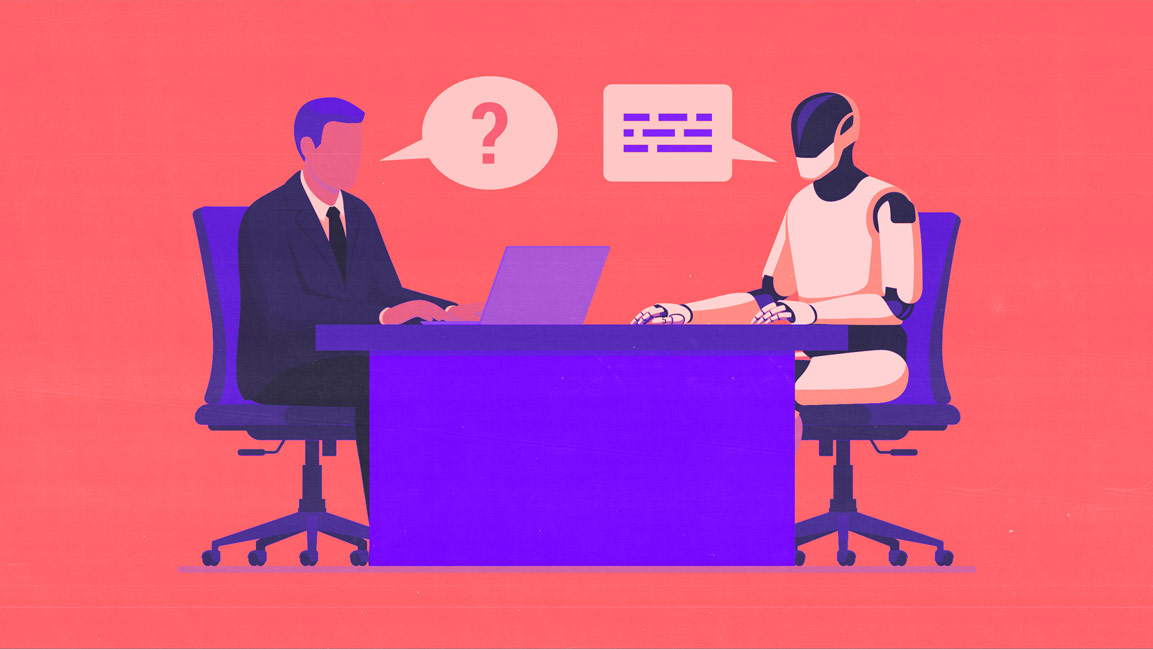
Image Credit- Chetan Jha/ MIT Sloan Management Review India
Artificial intelligence is already performing 37% of entry level tasks in India, above the global average of 33%, according to a new study by Cognizant and Pearson.
The findings point to a faster shift in one of the world’s largest early career labor markets, where companies are beginning to redesign junior roles around collaboration with AI rather than routine task execution.
The study, based on a survey of 750 HR leaders across India, the US and the UK, found that 18% of respondents said AI now handles half or more of entry-level work in their organizations.
The report does not suggest that entry-level hiring is disappearing. Instead, it says, early career roles are being reshaped. Nearly all HR leaders surveyed expect entry-level jobs to evolve into roles where employees supervise, manage or work alongside AI systems over the next five years.
A similar share expects AI to create new entry-level roles that do not exist today.
The shift is changing what employers expect from young workers. Nearly all respondents said soft skills such as adaptability, problem solving, communication and judgment have become more important as AI takes over routine work.
The study also found stronger demand for broader educational backgrounds. Sixty-nine percent of HR leaders said interdisciplinary skills are now more important for early career talent than narrow specialization, while 67% said they value liberal arts degrees more than before the rise of AI.
In India, 91% of organizations said AI skills are becoming more important even for non-technical roles, reflecting the spread of AI tools beyond technology teams into everyday business functions.
Companies are also reporting changes in how work is distributed. Eighty percent of Indian organizations said AI is helping employees focus on higher-value work, compared with 77% globally.
The transition, however, is exposing a skills gap. Ninety-one percent of HR leaders said employee demand for AI training has increased over the past year. At the same time, 63% of organizations in India said their learning and development programs are struggling to keep pace with the speed of change.
Finding AI-ready talent is also becoming harder. Sixty-one percent of organizations in India said they face challenges hiring people with the skills needed for changing roles.
Middle managers are emerging as a critical group in the transition. The study found that 95% of HR leaders see them as important to helping employees use AI effectively, while 92% said managers play a crucial role in redefining jobs as AI changes daily work.
“India is at the forefront of how AI is transforming entry-level work, with organizations already embedding AI into day-to-day operations at scale,” said Rajesh Varrier, President of Global Operations and Chairman and Managing Director of Cognizant India. “We are seeing a fundamental redesign of roles, where early-career talent is expected to work alongside AI and focus on higher-value outcomes.”
Kathy Diaz, Chief People Officer at Cognizant, said AI is exposing the limits of traditional hiring and learning models.
“With the fundamental shift in entry-level tasks and skill requirements changing rapidly, organizations must rethink how they hire and develop talent at pace,” Diaz said.
Pearson Chief Human Resources Officer Ali Bebo said companies should focus less on replacing tasks and more on building the capabilities needed for people and AI to work together.
The study follows Cognizant’s earlier New Work, New World 2026 research, which found that AI is already affecting 93% of jobs.
Cognizant said it hired 20,000 fresh graduates in 2025 and expects to exceed that number in 2026, signaling continued demand for early career talent even as job requirements change.