India Plugs Into Pax Silica as AI Supply Chains Realign
New Delhi embeds itself in US-backed technology architecture as global supply chains split along strategic lines.
News
- Birla Buys Sprng From Shell in $1.8 Billion Clean Energy Deal
- India Uses Open-Source AI to Hunt Cyber Flaws
- Elevation Bets $500 Million on India’s AI Startup Wave
- TCS Wins Five-Year ABB Network Deal
- HCL Tech Bets $367 Million on AI Infrastructure
- Leadership Transition at Jindal Steel as CEO Malhotra Exits
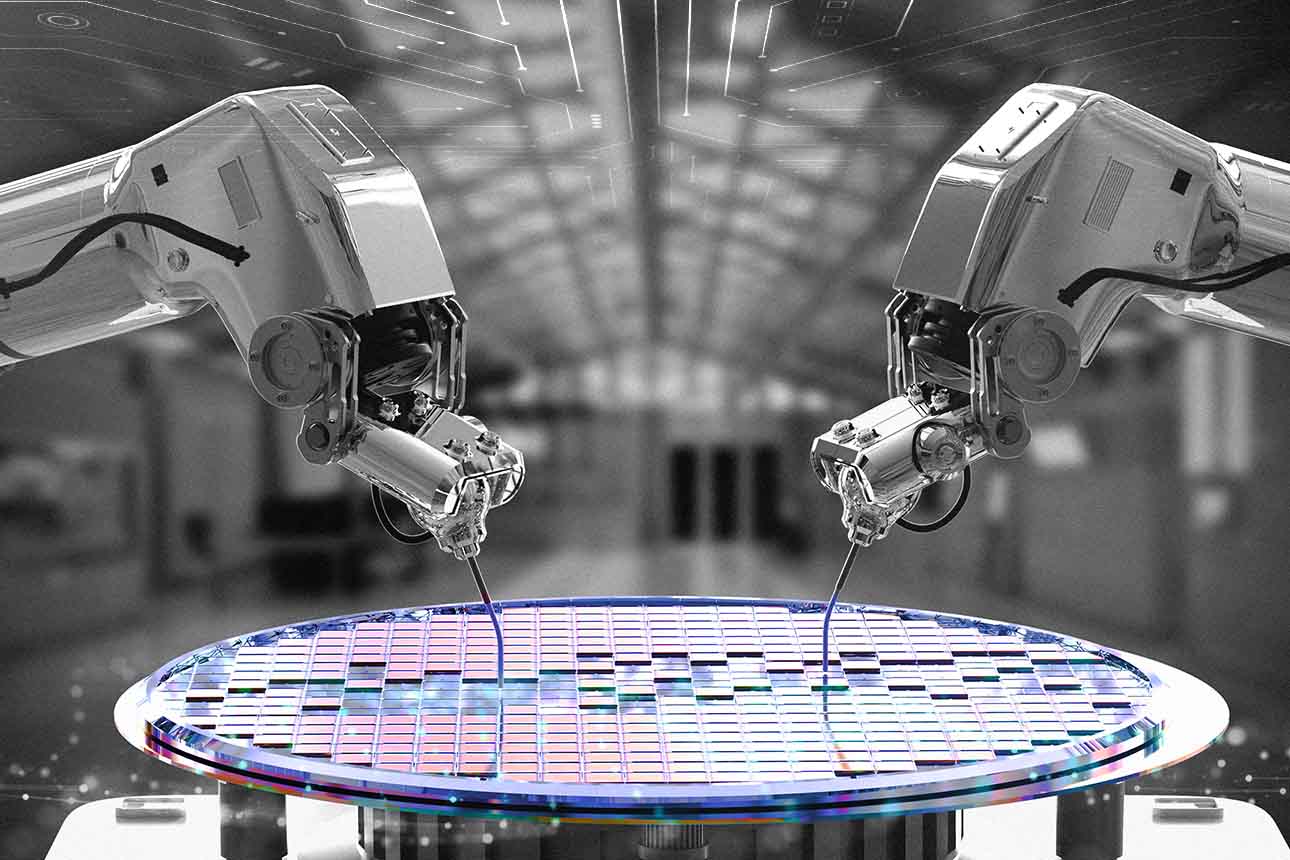
India joined the US-led Pax Silica initiative on Friday, 20 February, the fifth day of the India AI Impact Summit 2026, formally aligning itself with a technology coalition designed to secure semiconductors, critical minerals and advanced AI infrastructure as global supply chains fracture amid intensifying US-China rivalry.
The pact, launched in December, aims to reduce overconcentration in strategic inputs, prevent economic coercion and ensure that emerging technologies are governed by open democratic systems. In effect, it marks another step in the gradual formation of competing technology spheres of influence.
Pax Silica now includes Australia, Greece, Israel, Japan, Qatar, South Korea, Singapore, the United Arab Emirates, the United Kingdom, the United States and, following its signing at the summit, India.
US Ambassador to India Sergio Gor called India’s entry “strategic and essential.”
S. Krishnan, Secretary at India’s Ministry of Electronics and IT, described the move as “resilient collaboration with trusted partners who share our values,” positioning India within what he called the future global technology ecosystem.
US Under Secretary of State for Economic Growth, Energy, and the Environment Jacob Helberg framed the declaration in security terms. “Today, as we sign the Pax Silica declaration, we say no to weaponized dependency, and we say no to blackmail,” he said. “Economic security is national security.”
Micron Technology CEO Sanjay Mehrotra said the agreement reflects a “shared commitment to building resilient, secure supply chains” and a “win-win ecosystem to advance AI for good.”
Tata Electronics CEO Randhir Thakur described Pax Silica as “a timely and strategic step,” adding that semiconductor leadership depends on “materials, innovation, and compute.”
Earlier in the summit, Google and Alphabet CEO Sundar Pichai announced plans under the America-India Connect initiative to lay three subsea cables from India’s east coast to Singapore, South Africa and Australia, alongside new fiber routes strengthening connectivity between India and the US.
The expansion, part of Google’s broader multibillion-dollar push into India, reinforces the country’s role as both a growth market and a potential node in global AI infrastructure.
Explaining the rationale behind Google’s broader infrastructure push, Vrushali Gaud, who leads Net Zero and operations initiatives at Google, said India’s energy economics make it unusually well-positioned for AI-scale deployment.
“India is among fewer countries where math on energy just works,” she said, pointing to solar and wind capacity, battery research and grid upgrades.
With a population of 1.4 billion and rising digital demand, India presents what executives described as both a growth engine and an infrastructure laboratory.
While the US faces grid bottlenecks and permitting delays, Gaud said India is building a high-frequency, digitally integrated national grid. “If the country solves its permitting issue, then India has very much solved the entire stack.”
The panel discussion on ‘The Innovation Beneath AI: The US-India Partnership powering the AI Era,’ which included Jeff Binder of TokenForm, Tobias Helbig, CTO of NXP Semiconductors, Prince Dhawan of REC Ltd and venture investor Tuan Ho of Xfund, focused on how AI is reshaping infrastructure across energy, critical minerals, compute and data centers.
Ho said aging power systems globally present “a big opportunity for US and India working closely together” to build companies that reduce overdependence on single-country supply chains. The shift, he added, creates opportunities not just in AI applications but in long-neglected “input industries” that underpin compute capacity.
Dhawan reinforced that constraint. “AI essentially will not scale unless power is programmable,” he said, describing grids as the binding bottleneck. India’s “one nation, one grid” model, equipped with a digital and interoperable layer, allows dynamic allocation across wind, solar, hydro and conventional sources during peak demand.