
The Five Skills LinkedIn Says Will Keep Humans Ahead of AI
LinkedIn leaders Ryan Roslansky and Aneesh Raman argue that curiosity, courage, creativity, compassion and communication will define who stays relevant as AI spreads across the workplace.
Topics
News
- Fired OpenAI Researchers Warn Dismissals Could Chill Safety Work
- ARTEX Developer Closes AI Hacking Tool After Bank Attacks
- AI Redraws Global Race for Quant Talent as Coding Tools Lower Entry Barriers
- AI Dispatch | India Draws Billions Into AI
- AI Bots Now Make Up Half of Traffic to US Fed’s FRED Database
- Musk Blames ‘Oligarchs’ For Delay in Starlink’s India launch
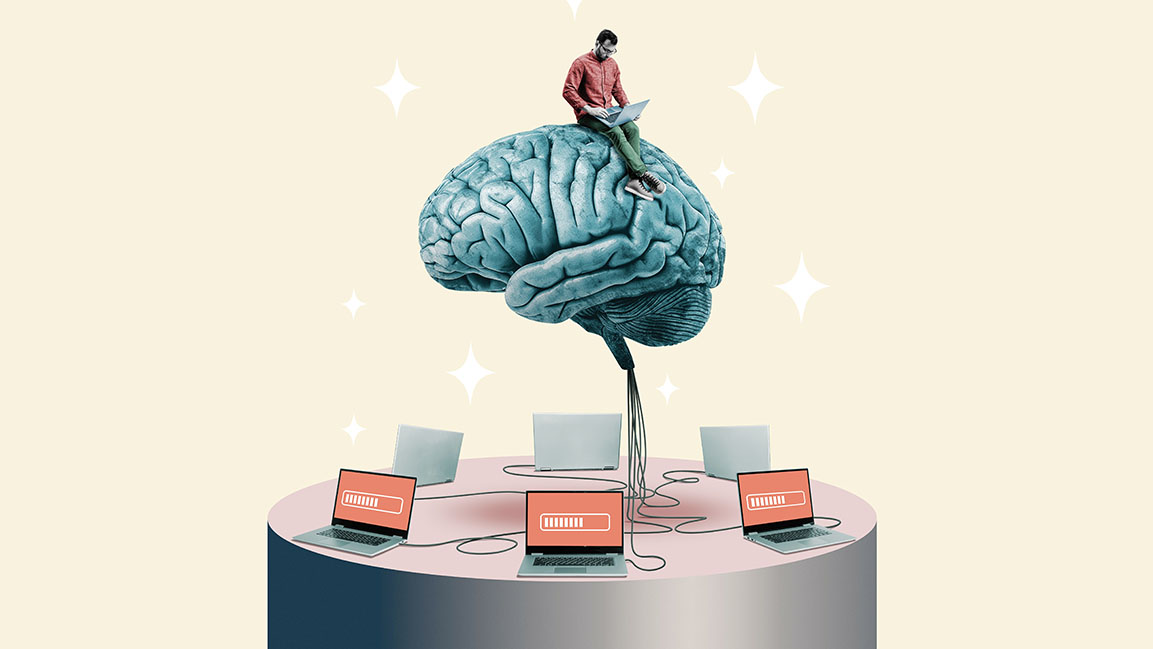
Curiosity, courage, creativity, compassion and communication will be the traits that keep workers relevant as AI takes on more routine tasks, according to a framework outlined by LinkedIn leaders in a CNBC commentary published alongside the launch of their new book.
Ryan Roslansky, LinkedIn’s Chief Executive, and Aneesh Raman, the company’s Chief Economic Opportunity Officer, said the five capabilities are the “core inputs” individuals can develop and that, in many ways, “enable everything else.”
The two set out the framework in connection with their new book, Open to Work: How to Get Ahead in the Age of AI, which was published on 31 March.
In the article, Roslansky and Raman said they spoke with neuroscientists, organizational psychologists, behavioral economists and talent leaders before settling on the five capabilities.
Their broader argument is that the issue is not simply whether jobs disappear, but how workers become more deliberate about where they add value as machines take on more tasks.
On curiosity, they wrote that AI can generate possibilities from patterns, but humans still decide which ones matter and which questions are worth asking.
In their telling, curiosity is less about collecting more information than about testing assumptions and asking what has not yet been tried.
They describe courage as the willingness to act without complete information and to move before the outcome is guaranteed.
AI may help calculate risk, but people still choose which risks are worth taking, whether that means backing a new idea, changing course midstream or stepping forward before there is full proof.
Creativity, in their telling, is not limited to artistic or design roles. It is the ability to imagine something new or reframe a problem in a way that leads to a different response. That could mean redesigning a process, shaping a better customer experience or finding a clearer way to present information that changes how others understand it.
Compassion is another capability they place at the center of work in the AI era. Their point is that workplaces still run on relationships, trust and judgment, and that these are strengthened when leaders and colleagues notice what others are carrying and respond in a human way rather than treating every interaction as a transaction.
The fifth capability, communication, is where they draw one of the sharpest contrasts with AI. Machines can summarize, translate and draft, but people still supply meaning, persuasion and emotional force. In their telling, communication is often the difference between an idea that gains momentum and one that fades.
The broader message in the book is that workers should think more in terms of adaptability, experimentation and skill-building.
Raman described that shift elsewhere as moving from a ladder to a “career climbing wall,” where progress is less linear and more dependent on how people combine judgment, initiative and learning in real time.
Roslansky and Raman also said their own experience writing the book reinforced the point.
AI could help with structure and examples, but they argue the substance came from conversations, debate and the friction of ideas with real people.