


OpenAI Enters AI Chip Race With Jalapeno
The company’s first custom processor was built with Broadcom for large language model inference.
News
- Fired OpenAI Researchers Warn Dismissals Could Chill Safety Work
- ARTEX Developer Closes AI Hacking Tool After Bank Attacks
- AI Redraws Global Race for Quant Talent as Coding Tools Lower Entry Barriers
- AI Dispatch | India Draws Billions Into AI
- AI Bots Now Make Up Half of Traffic to US Fed’s FRED Database
- Musk Blames ‘Oligarchs’ For Delay in Starlink’s India launch
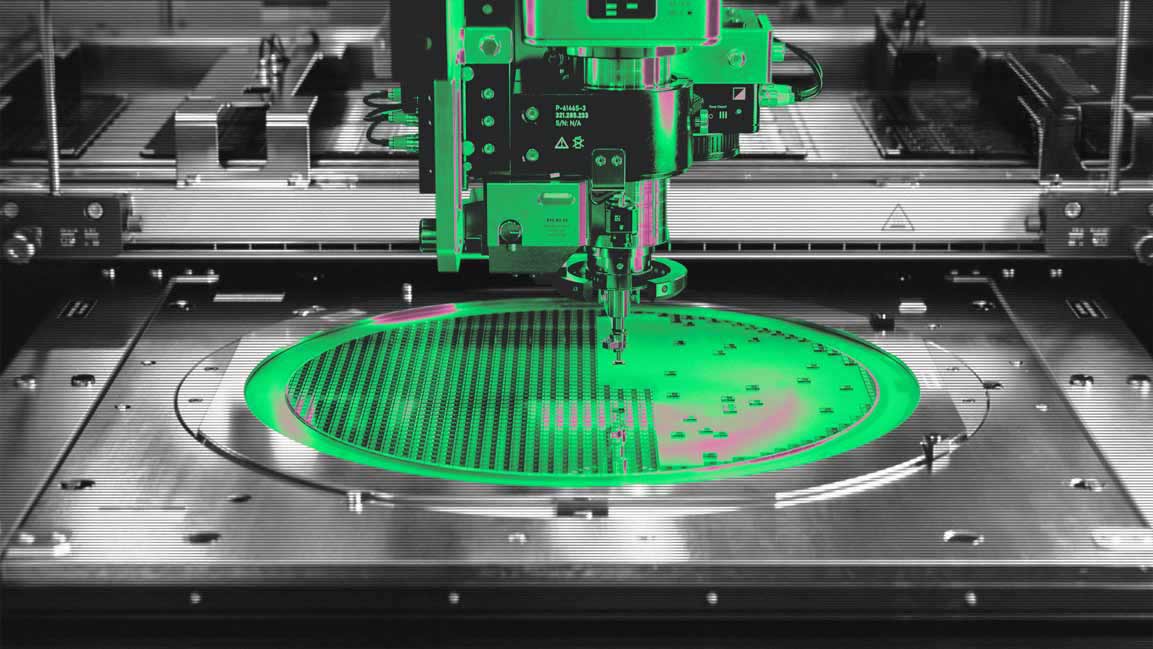
OpenAI on Wednesday unveiled Jalapeno, its first custom AI processor, marking a deeper push into the infrastructure used to run ChatGPT and other large language models.
The chip, developed with Broadcom, is built for AI inference, the stage at which trained models generate responses for users. It puts OpenAI in a widening race among technology companies to design custom silicon for artificial intelligence, a market still dominated by Nvidia.
Jalapeño is the first product in a multi-generation compute platform OpenAI and Broadcom are building together. The companies said the chip is designed around the needs of large language model inference rather than adapted from older processor designs.
OpenAI said engineering samples of Jalapeño are already running machine learning workloads in its labs at target production frequency and power, including GPT-5.3-Codex-Spark.
The company said early testing showed substantially better performance per watt than current state-of-the-art systems.
“The world is moving to a compute-powered economy,” OpenAI President and Co-founder Greg Brockman said. “Jalapeño is part of our long-term full-stack infrastructure strategy to make compute more abundant, resulting in AI which is faster, more reliable, more affordable for people and businesses.”
OpenAI said the chip moved from initial design to manufacturing tape-out in just nine months. The company also disclosed that its own AI models helped engineers accelerate parts of the chip design and optimization process.
Richard Ho, who leads OpenAI’s hardware program, said the processor was built around the inference requirements of frontier AI models.
“Jalapeño was designed from the ground up for LLM inference,” Ho said. “We optimized the architecture around the kernels, memory movement, networking, and serving patterns that matter most for frontier AI models.”
Broadcom President and Chief Executive Hock Tan said the collaboration represents the start of a longer-term partnership.
“Our collaboration with OpenAI represents a fundamental commitment to scaling the physical infrastructure required for the next decade of AI,” Tan said. “This is just the beginning of a multi-generation roadmap.”
The announcement comes as AI companies seek greater control over the infrastructure underpinning their models. Google, Amazon and Microsoft have all developed custom AI chips in recent years to improve efficiency and reduce reliance on external suppliers.
For OpenAI, Jalapeño represents more than a new processor. It signals the company’s ambition to compete not only in AI models and applications, but also in the hardware layer that increasingly determines the cost, speed and scale of artificial intelligence.